The No-Fluff Starter Guide to Improving Your Appearance
Want to look better? Start with fundamentals in the right order — no gimmicks, no $5,000 procedures required to see most of the gains. This is the map: what matters most, what to do first, and where to go for the detail. The order is deliberate, because early steps make later ones pay off more. This guide stays high-level on purpose and links to the in-depth cornerstone guides for each topic.
The order that actually works
Prioritize in this sequence. Each step compounds the next:
- Body composition — get to a lean, healthy range. This is the highest-leverage change and it improves your face, not just your body.
- Face — skin, grooming, and framing, once body fat isn't hiding your structure.
- Style and presentation — clothes and grooming that show the work off.
- Recovery and lifestyle — sleep, stress, and consistency, which quietly drive all of the above.
A note on the common "your face is X% body fat, Y% grooming, Z% bone" formulas floating around: those precise percentages are made up. The honest version is qualitative — body fat and grooming are the biggest changeable factors in how your face looks, while bone structure (which you can't change without surgery) sets the fixed baseline. That's the useful truth without the fake precision.
Step 1: Build your body (the foundation)
Body composition affects facial definition, perceived fitness, posture, and confidence all at once. It's where beginners should start.
Training. A simple, effective structure is push/pull/legs, trained 3–4 days a week with progressive overload (gradually adding weight or reps). Compound lifts — squats, deadlifts, presses, rows, pulldowns — drive most of the results; accessory work fills in. For how to build the specific proportions that read as aesthetic (broad shoulders, controlled waist), see the aesthetic physique.
Nutrition. You don't need perfection, you need a rough handle on the basics:
- Calories decide whether you gain or lose weight. Track for a couple of weeks to learn your intake — most people badly misjudge it.
- Protein (roughly 0.7–1 g per lb of bodyweight) preserves muscle when cutting and builds it when gaining.
- Cut or bulk based on where you are: lean out if body fat is hiding your structure; gain if you're underweight, in a modest surplus.
Body fat is the lever for your face too. Getting to a sustainable lean range reveals your jaw and cheekbones — this is covered in depth, including the important point that you can get too lean, in the body fat & facial definition guide.
Timeline. Beginners see visible change in 8–12 weeks of consistent training; a genuine transformation is a matter of months to a couple of years. The first six months deliver most of the visible return.
Step 2: Optimize your face
Once body fat isn't the bottleneck, the face responds to skin quality, grooming, and framing. None of this changes bone — all of it changes how you read.
Skin. A simple routine — gentle cleanser, a retinoid at night, moisturizer, and daily sunscreen (the highest-evidence anti-aging step there is) — does the large majority of the work. Full routine in the skincare guide; if acne is your main concern, see the acne guide.
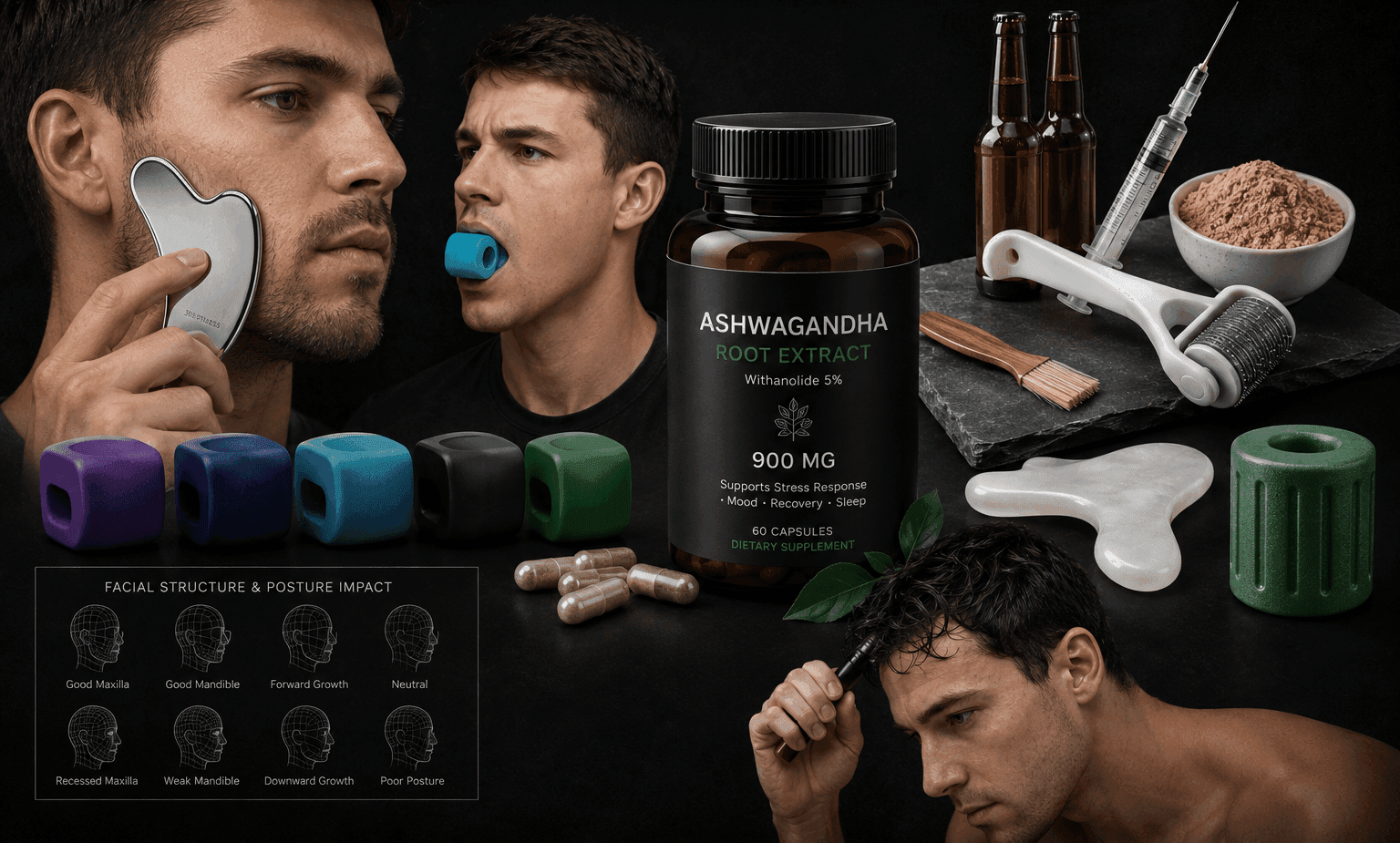
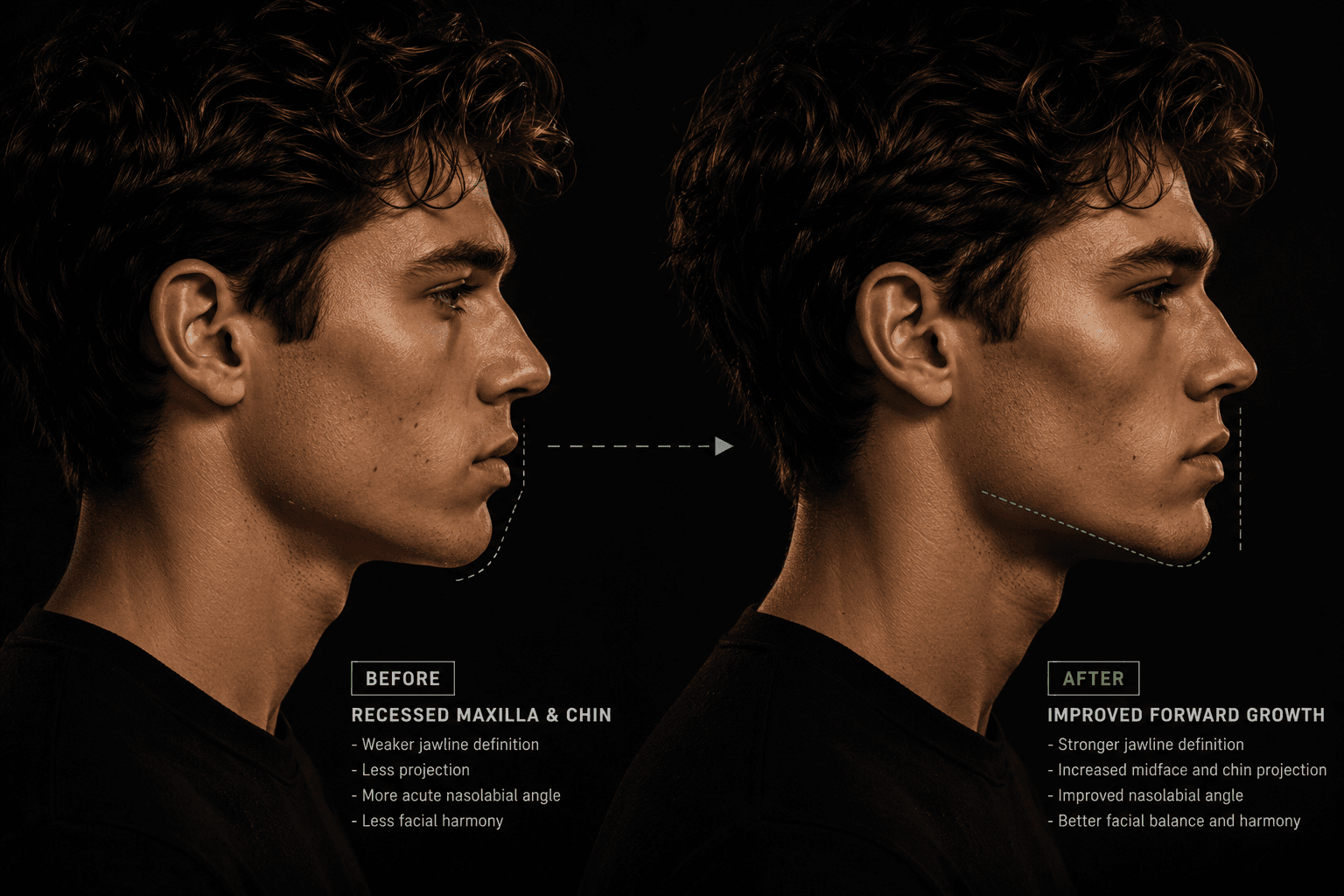
Understand your structure. Learning how your jaw, cheekbones, and eye area actually work helps you choose a haircut, a beard style, and realistic goals — and avoid chasing things that can't change. See the facial structure guide. And be skeptical of "mewing"/jaw-training claims: they don't remodel adult bone — the honest evidence is in the mewing guide. For a defined jaw as an adult, the real levers are getting lean and fixing posture.
Hair. Hair strongly affects perceived age and framing, and hair loss is most treatable early. If you're thinning, act sooner rather than later — the evidence-based options are in the hair guide.
Facial hair. If you can grow a beard, it can reinforce the jaw and add maturity — but upkeep is everything; a neat short beard beats a patchy or unkempt one. If it grows patchy, clean-shaven usually looks better.
Eyebrows and eyes. Well-groomed brows frame the face and are a high-return, low-effort change; see the eye-area guide. For under-eye darkness, see dark circles.
Teeth. Straightening (aligners or braces) and basic whitening are among the highest-return facial changes available, and good daily hygiene is non-negotiable.
Step 3: Style and presentation
Your training is wasted if your clothes hide it. The fundamentals — fit first, then color coordination, then materials — matter far more than brand or trend, and a small neutral wardrobe multiplies into many good outfits. Rather than repeat it here, the full playbook (fit rules, a core wardrobe, color for your coloring, and honest photo/presentation tips) is in the style & visual optimization guide.
Step 4: Advanced enhancements (optional, later)
Only after steps 1–3 are dialed in. These are refinements, not foundations, and the more aggressive ones belong with a professional:
- Microneedling / retinoids for skin texture (retinoids have the stronger evidence — see skincare).
- Chemical peels and lasers for scarring and pigmentation — clinician territory, with real downtime and cost.
- Cosmetic procedures (fillers, and surgical options) can produce larger changes but carry real risk; approach them conservatively and only with a qualified provider. The hollow cheeks guide includes an honest look at why some popular procedures can backfire.
Step 5: Recovery and lifestyle (the multiplier)
The unglamorous inputs drive everything above:
- Sleep (7–9 hours). Poor sleep raises stress hormones, worsens skin and recovery, and even lowers testosterone — and it visibly makes you look more tired and less healthy. It's foundational; see the hormones guide.
- Posture. One of the fastest visible wins — it improves how lean, tall, and confident you look, often within weeks. See the posture guide.
- Hydration and sensible sodium/alcohol. These drive short-term facial puffiness; see debloating.
- Stress management. Chronic stress undermines skin, sleep, and body composition. Whatever genuinely lowers your stress load counts.
The bottom line
- Order matters: body composition first (it improves your face too), then face, then style, then recovery.
- The biggest changeable levers are boring and reliable: leanness, skin, grooming, posture, sleep. Master these before chasing hacks.
- Bone structure is fixed — optimize what you can change, and be skeptical of anything promising to reshape adult bone without surgery.
- Consistency over 6–12 months beats any single trick. You don't need perfect genetics; you need to do the fundamentals and give them time.
Use this as your map, then go deep on each area with the linked cornerstone guides.