The Aesthetic Male Physique: Frame, Proportions, and How to Train for Them
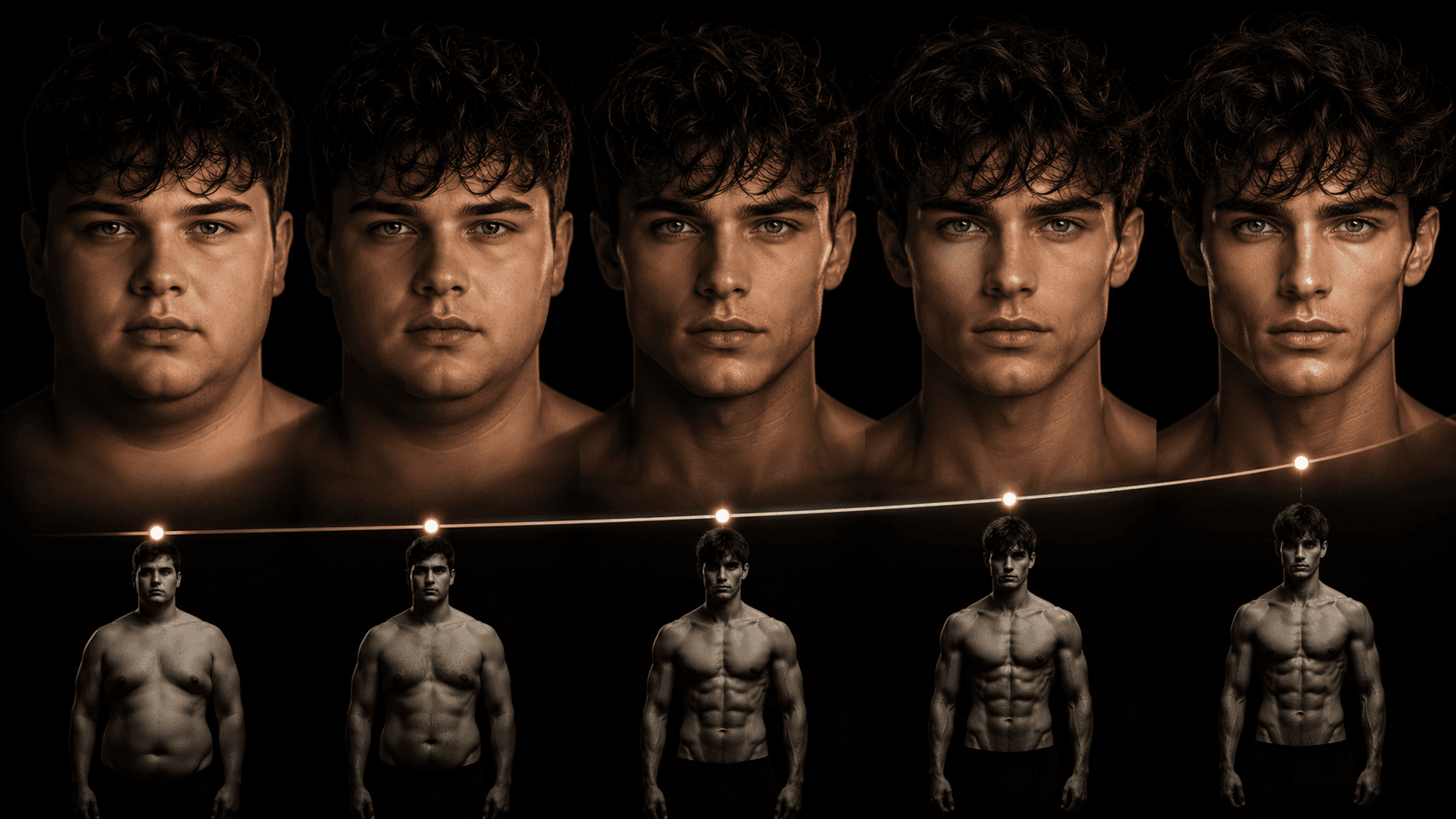
An "aesthetic" male physique isn't about maximum size. It's about proportion — specifically a torso that reads as a broad-shouldered, narrow-waisted V, carried at a body-fat level low enough to show it. This guide covers what actually creates that shape: the skeletal frame you're born with, the muscle you can build on top of it, and the body fat that determines whether any of it shows. It's honest about which "ideal ratios" are backed by evidence and which are just gym-culture convention.
Contents
- What the evidence actually supports
- Frame: the part you're born with
- The V-taper and the shoulder-to-waist ratio
- "Classic proportions" and the golden-ratio myth
- The three levers you can train
- Body fat: the multiplier
- Posture, glutes, and structural presentation
- Accessories: arms, forearms, calves
- Putting it together
What the evidence actually supports
The strongest, most replicated finding in this area is about the upper body: both men and women rate men with a larger shoulder-to-hip (or shoulder-to-waist) ratio as more attractive, more masculine, and more physically formidable.12 This holds behaviorally and even shows up in brain-response (EEG) studies of how people process male body shape.1 Upper-body breadth relative to a narrow waist is the single clearest "aesthetic" signal in the male physique literature.
Two honest qualifications:
- Preference is for a strong ratio, not a maximal one; cartoonish proportions aren't the target, and the research measures moderate silhouette differences.2
- In some research the upper-body effect interacts with height, boosting attractiveness ratings more for taller men — another reason to treat a single "ideal" number with caution.
Everything else in this guide — specific "ideal" numbers, the golden ratio, waist measurements to the inch — is aesthetic convention. Useful as goals, but don't mistake tradition for evidence.
Frame: the part you're born with
Before muscle, there's the skeleton the muscle hangs on. The dominant factor in upper-body width is clavicle (collarbone) length, along with rib-cage width and shoulder-blade positioning. These are largely genetic and essentially fixed in adulthood.
Why it matters: a longer clavicle sets a wider shoulder base, so the same amount of deltoid and back muscle produces a wider-looking frame. Someone with long clavicles gets an impressive taper with moderate mass; someone with short clavicles has to build more shoulder and back muscle — and hold a tighter waist — to reach the same visual effect.
The practical takeaway is not "check if your frame is good enough." It's:
- You can't change the bone, so stop measuring it. Frame sets your starting point, not your ceiling for looking good.
- Narrow frame → prioritize the levers you control: side-delt development, lat width, and waist control matter more for you, not less.
- Wide frame → don't coast: a good frame with no muscle just looks like a coat-hanger.
The V-taper and the shoulder-to-waist ratio
The V-taper is the triangular silhouette created when the shoulders and upper back are visibly wider than the waist. It's the physique trait most directly tied to the attractiveness research above.12 It's created by three things working together:
- Shoulder width — primarily the lateral (side) deltoids, which set the top corners of the V.
- Lat width — the latissimus dorsi flaring out from the waist, which creates taper from behind and from the front.
- Waist control — a tight midsection so the top looks wide by contrast. A narrow waist is as important as broad shoulders; you can't out-train a bloated or high-body-fat midsection.
A common gym heuristic is a shoulder-to-waist ratio around 1.6:1, sometimes dressed up as "the golden ratio." Treat that as a rough aspirational target with a nice ring to it, not a validated attractiveness threshold — the research supports "broader shoulders relative to waist read as more attractive," not a magic number.
"Classic proportions" and the golden-ratio myth
Old-school bodybuilding (and a lot of modern content) prescribes precise proportional targets — arms equal to neck equal to calves, a waist a specific fraction of shoulder width, the 1.618 golden ratio applied to the body. Two things are true at once:
- As training goals, they're fine. Aiming for a balanced, symmetrical build with developed shoulders/back and a controlled waist will produce an aesthetic physique.
- As science, they're not validated. There's no good evidence that hitting 1.618 specifically does anything a slightly different ratio wouldn't. These are conventions from art and bodybuilding culture, repeated so often they sound empirical.
So use "classic proportions" as a direction — build a balanced body, don't neglect legs and back for a mirror-muscle chest-and-arms look — without treating any specific decimal as a finish line.
The three levers you can train
To build the V, train the three components deliberately. This is a priority framework, not a full program — pair it with progressive overload and enough protein.
1. Shoulders (side delts). The biggest visual return for width. Overhead pressing builds mass; lateral raises specifically widen the top of the V. Most people under-train side delts relative to their aesthetic payoff.
2. Back width (lats). Vertical pulling — pull-ups, lat pulldowns — drives lat width. Rows build thickness and posture (see below). Both matter; for taper specifically, prioritize width work.
3. Waist control. This is mostly body fat (next section), plus not over-developing the obliques/waist with heavy loaded twisting or excessive heavy ab work if a tight waist is the goal. Core training for strength and posture is good; chasing a thicker waist is counterproductive to taper.
Legs and the rest of the body still matter — a strong upper body on toothpick legs looks unbalanced, and leg training supports overall muscle and hormonal response — but for the specific V-taper look, shoulders, lats, and waist are the levers.
Body fat: the multiplier
You can build excellent proportions and hide them entirely under body fat. Fat around the waist directly attacks the taper (it widens the bottom of the V), and overall leanness is what makes shoulders, arms, and back look defined rather than merely big.
For most men, the "aesthetic" range where muscularity and definition both show is roughly 10–15% body fat — lean enough to see structure, not so lean that it's unsustainable or unhealthy. Chasing single-digit body fat year-round is unnecessary for looks and hard on training, recovery, and hormones (see the hormones guide). The same body-fat principle drives facial definition — details in the body fat & facial definition guide.
The practical loop: build muscle in a slight surplus, then diet down in a moderate deficit to reveal it, repeat. Aggressive crash cuts cost muscle and rarely look good.
Posture, glutes, and structural presentation
How you carry the physique changes how it reads. Two under-appreciated pieces:
Posture. Rounded shoulders and forward-head posture collapse the chest, roll the shoulders forward (killing width), and make the whole torso look slumped. Retracting the shoulders and stacking the head over the shoulders instantly widens the frame and improves the taper — no muscle required. Rowing and upper-back work support this. Full detail in the posture guide.
Glutes and pelvic position. The glutes aren't just aesthetic — they help control pelvic tilt. Weak, under-used glutes are one contributor to anterior pelvic tilt, where the pelvis rotates forward, exaggerating the lower-back arch and pushing the belly out, which makes the waist look worse and the posture less athletic. Strengthening the glutes (hip thrusts, squats, Romanian deadlifts) alongside hip-flexor and core work supports a neutral pelvis and a cleaner front-on silhouette. Note the honest limit: anterior pelvic tilt is multifactorial and a small degree is normal — glute training helps posture and presentation, it isn't a cure-all, and severe or painful cases warrant a physio's assessment.
Accessories: arms, forearms, calves
These don't build the V, but they round out an aesthetic physique and they're the parts most visible in everyday clothing:
- Forearms and grip. Forearms are always on display and signal overall conditioning. Much of their development comes indirectly from heavy pulling and carrying (deadlifts, rows, farmer's carries), with direct wrist curls/reverse curls as a supplement. Don't build a whole routine around them — a small amount of direct work plus heavy compound pulling is enough.
- Arms and calves. Biceps and triceps balance the shoulders; calves balance the legs. Train them for symmetry, but don't let "mirror muscles" crowd out the shoulders, back, and legs that actually build the frame.
The principle for all accessories: they're the finish, not the foundation. A little targeted work is worthwhile; making them the centre of your training at the expense of the V-taper drivers is a classic mistake.
Putting it together
- Your frame sets the starting line, not the outcome. Clavicle length is fixed; the levers that matter are trainable.
- Broad shoulders + narrow waist is the one physique signal the research clearly backs.12 Build side delts and lats, control the waist.
- "Ideal ratios" and the golden ratio are useful goals, not validated numbers — aim for balance, not a specific decimal.
- Body fat decides whether any of it shows. ~10–15% is the practical aesthetic range for most.
- Posture and glute/pelvic control change how the whole thing reads for free.
- Accessories finish the look; they don't create it.
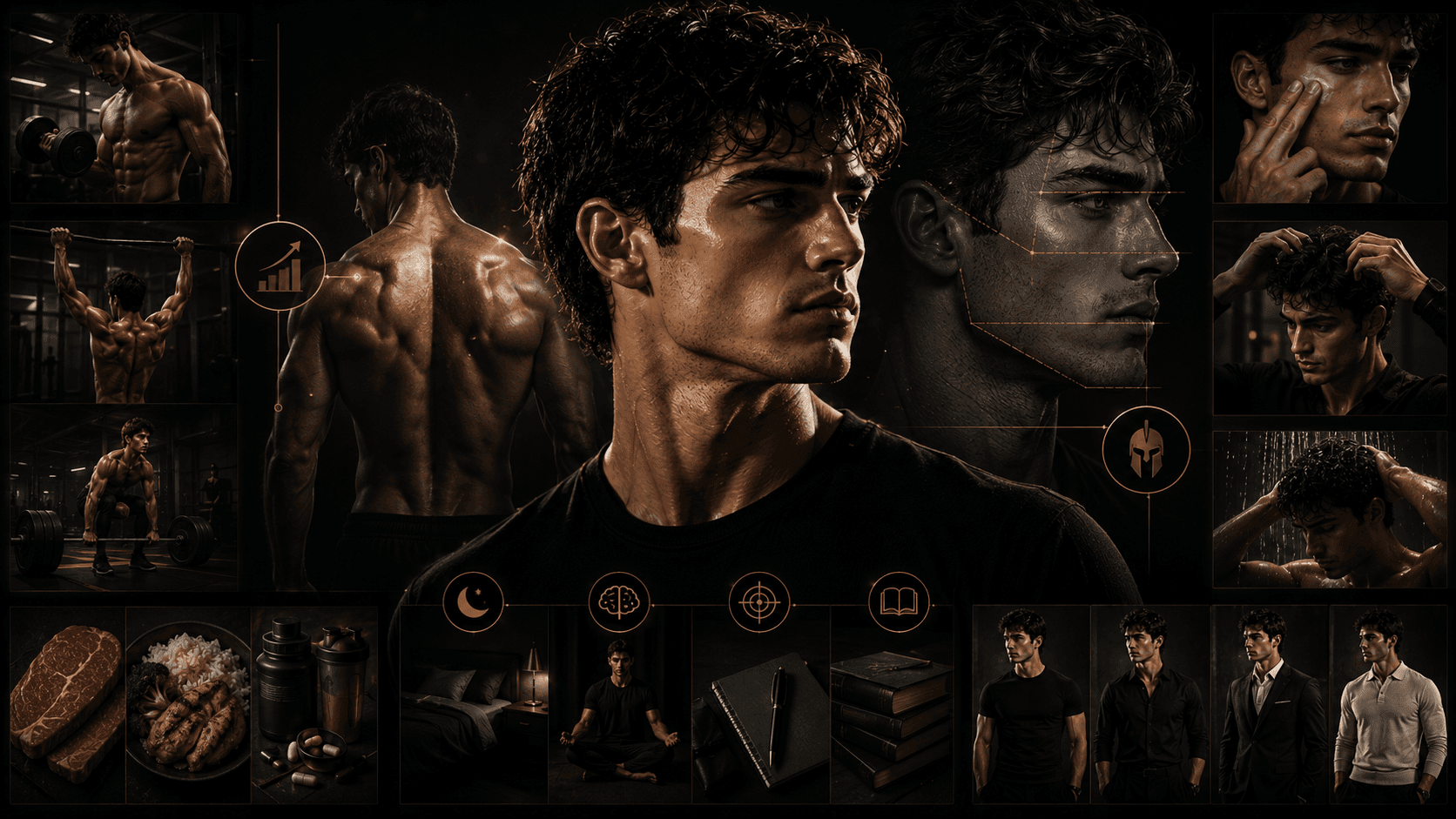
Do the boring, high-leverage things consistently — press and pull hard, keep the waist tight, manage body fat, fix posture — and an aesthetic physique follows from almost any frame.
References
Footnotes
-
Pazhoohi F, Arantes J, Kingstone A, Pinal D. Neural Correlates and Perceived Attractiveness of Male and Female Shoulder-to-Hip Ratio in Men and Women: An EEG Study. Archives of Sexual Behavior (2023). https://link.springer.com/article/10.1007/s10508-023-02610-w ↩ ↩2 ↩3 ↩4
-
Pazhoohi F, et al. Sex Differences for Preferences of Shoulder to Hip Ratio in Men and Women: an Eye Tracking Study. Evolutionary Psychological Science (2019). Higher male SHR is attended to and treated as a cue to masculinity, strength, and formidability. https://link.springer.com/article/10.1007/s40806-019-00198-w ↩ ↩2 ↩3 ↩4