Body Recomposition: How to Lose Fat and Build Muscle at the Same Time (Realistically)
"Body recomposition" — losing fat and building muscle at the same time — is one of the most argued-about ideas in fitness. One camp says it's impossible; the other sells it as a hack anyone can do overnight. The honest answer sits in between: it's real and well documented, but it's slower, more limited, and less dramatic than the internet implies, and it favors some people far more than others. This guide is the realistic version — what actually drives it, how to set it up sensibly, and when you're better off not attempting it at all.
For the training side of the equation, this pairs with the workout splits guide; this one focuses on the body-composition and nutrition logic.
What recomposition actually is
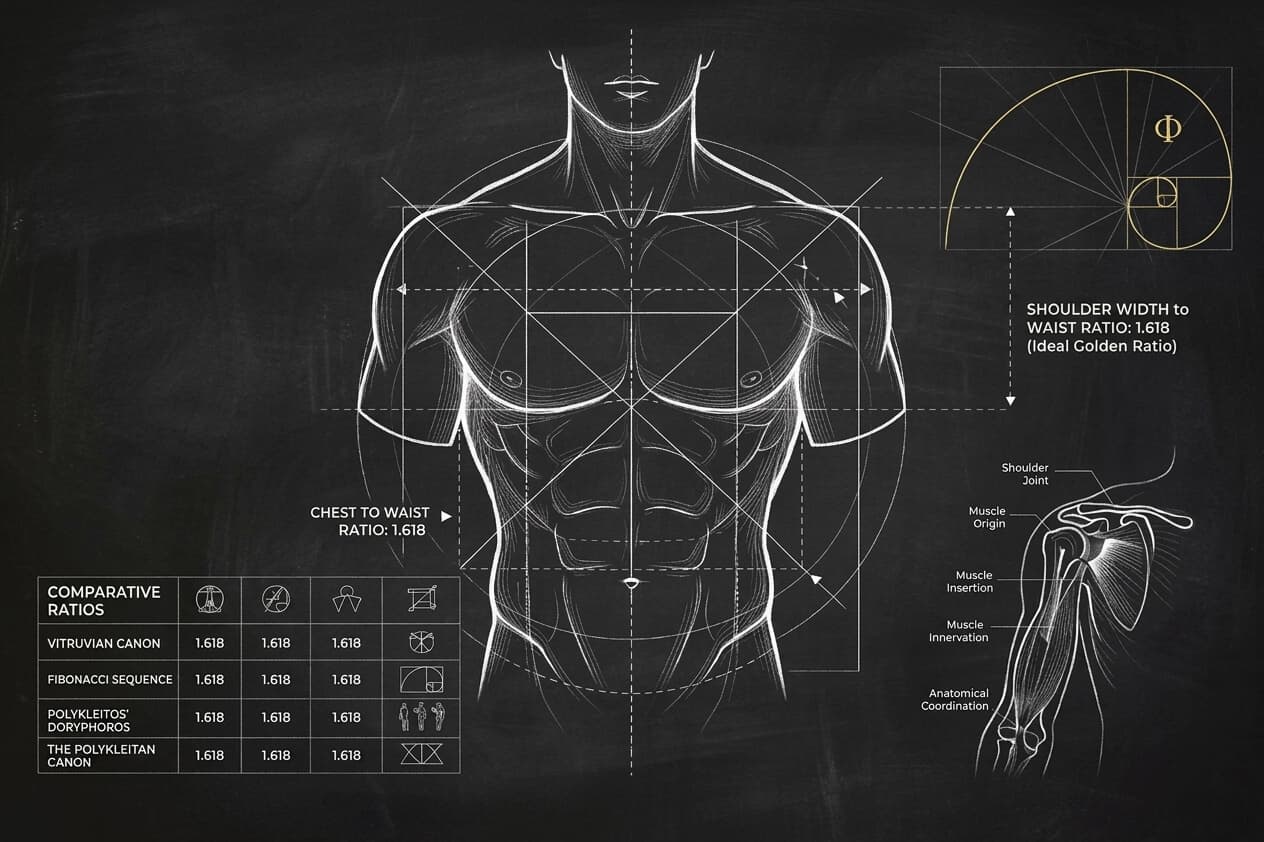
Your body weight is made of several things; for our purposes, the two that matter are fat mass and muscle (lean) mass. Most people who "lose weight" lose a mix of both, and most who "gain weight" gain a mix of both. Recomposition means shifting the ratio — dropping fat while adding or keeping muscle — even if your scale weight barely changes.
The apparent paradox is why people call it impossible: fat loss requires an energy deficit (eating less than you burn), while building muscle is usually associated with an energy surplus. But those don't fully cancel out. A surplus isn't strictly required to build muscle — the body can draw on stored fat for energy while a strong training stimulus and enough protein direct the building of muscle. That's the window recomposition lives in.
Who can recomp — and how fast
This is the part most guides gloss over, and it matters most. A review of the recomposition research found the effect is documented not only in beginners but in trained lifters too — but it's far from equal across people.1 Roughly in order of how readily it happens:
- Easiest: beginners, people returning after a long break, and those carrying significant body fat who've never trained. New and returning lifters build muscle quickly ("newbie gains" and muscle memory), and higher body-fat individuals have ample stored energy to fuel muscle growth during a deficit. These groups can lose noticeable fat and gain noticeable muscle at the same time.
- Slower but real: intermediate lifters with a few years of training, if protein and progressive overload are dialed in.
- Hardest and most marginal: lean, advanced, natural lifters. The closer you are to your genetic muscular ceiling and the leaner you are, the harder it becomes to do both at once — here, recomposition is slow and small, and dedicated bulk and cut phases usually produce clearer results.1
So the first honest question isn't "how do I recomp?" but "am I in a group where it's worth pursuing?" For most beginners and heavier individuals, yes — it often happens almost automatically with good training and protein. For a lean, experienced lifter, alternating phases is usually the better bet.
The two levers that make it work
Whoever you are, two things drive recomposition, and almost nothing else matters as much:
1. Progressive resistance training. Lifting — and gradually adding reps or weight over time — is the signal that tells your body to build and keep muscle even while you're eating at or below maintenance. Without it, a deficit strips muscle along with fat. This is non-negotiable; the workout splits guide covers how to program it.
2. Enough protein. Protein is the raw material. For building muscle, the benefit of more protein plateaus around 1.6 g per kg of bodyweight per day in the research.2 During a deficit specifically, higher intakes help protect muscle — in a controlled trial, young men eating 2.4 g/kg during a marked deficit while training hard actually gained lean mass and lost more fat than a lower-protein group that merely maintained muscle.3 A practical takeaway: aim toward the higher end (around 2 g/kg or a bit above) when you're in a deficit, and spread it across your meals.
The third ingredient is the calorie environment — and the key word is moderate. Recomposition happens at maintenance or a small deficit, not an aggressive one. Crash dieting does the opposite of what you want: steep deficits burn through muscle and blunt training performance, sabotaging the whole point.
How to set it up
A sensible, non-extreme setup:
- Train hard and progressively, three to five times a week, and actually add reps or load over time.
- Prioritize protein in the ranges above, spread through the day.
- Eat near maintenance. If you have fat to lose, a small, sustainable deficit; if you're already lean and want muscle, maintenance or a tiny surplus. A slow rate of change — on the order of half a percent to one percent of bodyweight per week when cutting — is a reasonable ceiling, and gentler is fine. This is deliberately unaggressive: slow is the point.
- Sleep and recover. Under-recovery caps muscle growth and makes a deficit harder to sustain (see sleep and appearance).
- Be patient and measure properly (more below).
Two things this guide deliberately won't do: hand you a specific calorie number or a rigid meal plan. Those depend on your body, activity, and goals, and a registered dietitian or qualified coach is the right person to set them individually — especially if you have any health conditions.
Why the scale will lie to you
Here's the single most important expectation to set: during recomposition, the scale barely moves, and that's normal. If you lose 2 kg of fat and gain 1 kg of muscle, the scale shows a 1 kg loss — or if the numbers match, no change at all — while your body visibly transforms. People quit recomposition constantly because the scale "isn't moving," not realizing that's exactly what success can look like.
So don't judge progress by weight alone. Track progress photos, waist and limb measurements, how your clothes fit, and your strength in the gym. Those reveal the composition change the scale hides.
Realistic expectations
Recomposition is slow — a matter of months, not weeks — and the returns shrink the leaner and more advanced you get. Nobody can promise you a specific result; genetics, training history, and consistency all shape it. Set the timeline in your head to seasons, not days, and the process becomes much easier to stick with.
Common mistakes
- Crash dieting. The fastest way to lose muscle and stall. Moderate beats aggressive every time.
- Too little protein. Undercuts muscle retention during a deficit.
- No progressive overload. Training without gradually challenging yourself gives your body no reason to keep muscle.
- Chasing the scale. Leads people to quit a working plan, or to over-restrict chasing a number that isn't the goal.
- Impatience and program-hopping. Recomposition rewards months of consistency; switching plans every three weeks resets your progress.
When a bulk/cut cycle is the smarter move
Recomposition isn't always the best strategy. If you're lean and want to add real size, a controlled lean bulk (a small surplus) followed by a cut generally builds more muscle than trying to recomp in place. If you're carrying a lot of fat, prioritizing a moderate deficit is the move — and as a beginner you'll likely recomp along the way regardless. Recomposition shines most for beginners, returners, and those in the middle; it's not a mandate for everyone.
A note on doing this healthily
Body recomposition is a slow, health-positive process when approached sensibly — enough food, enough protein, hard training, good sleep, patience. It should not involve extreme restriction, punishing amounts of cardio, or obsessive tracking. If food, weight, or exercise starts to feel distressing or all-consuming, that's worth talking through with a doctor or a qualified professional — that matters more than any physique goal. This guide is general information, not individualized medical or nutrition advice.
The bottom line
Losing fat while building muscle is real, not a myth — but it's slow, it favors beginners and people with more fat to lose, and it runs on two things above all: progressive resistance training and enough protein, in a moderate (never crash) calorie environment. Judge it by photos, measurements, and strength rather than the scale, which will barely budge by design. And if you're lean and advanced, respect the limits — a proper bulk-and-cut will usually get you further than forcing a recomp. Do the boring things consistently for a few months and your composition changes, even when the number on the scale doesn't.
References
Footnotes
-
Barakat C, Pearson J, Escalante G, Campbell B, De Souza EO. Body Recomposition: Can Trained Individuals Build Muscle and Lose Fat at the Same Time? Strength and Conditioning Journal (2020);42(5):7–21. https://doi.org/10.1519/SSC.0000000000000584 — recomposition is documented in beginners, higher-body-fat individuals, and trained lifters; driven by progressive resistance training and adequate protein, and becomes slower/more marginal as one gets leaner and more advanced. ↩ ↩2
-
Morton RW, Murphy KT, McKellar SR, et al. A systematic review, meta-analysis and meta-regression of the effect of protein supplementation on resistance training-induced gains in muscle mass and strength in healthy adults. British Journal of Sports Medicine (2018);52(6):376–384. https://pubmed.ncbi.nlm.nih.gov/28698222/ — benefits to resistance-training gains plateau at roughly 1.6 g protein per kg bodyweight per day. ↩
-
Longland TM, Oikawa SY, Mitchell CJ, Devries MC, Phillips SM. Higher compared with lower dietary protein during an energy deficit combined with intense exercise promotes greater lean mass gain and fat mass loss: a randomized trial. American Journal of Clinical Nutrition (2016);103(3):738–746. https://pubmed.ncbi.nlm.nih.gov/26817506/ — during a deficit, a higher-protein group (2.4 g/kg) gained lean mass and lost more fat than a lower-protein group (1.2 g/kg). ↩