
Acne Fixes That Actually Work
Acne is more than teenage drama; it's an inflammatory condition of the hair follicle and sebaceous gland that can persist into adulthood and leave lasting scars or psychological effects. The good news: with the right routine and a plan, most acne responds well. This comprehensive guide covers the science, proven treatments, and realistic timelines.
What Actually Causes Acne?
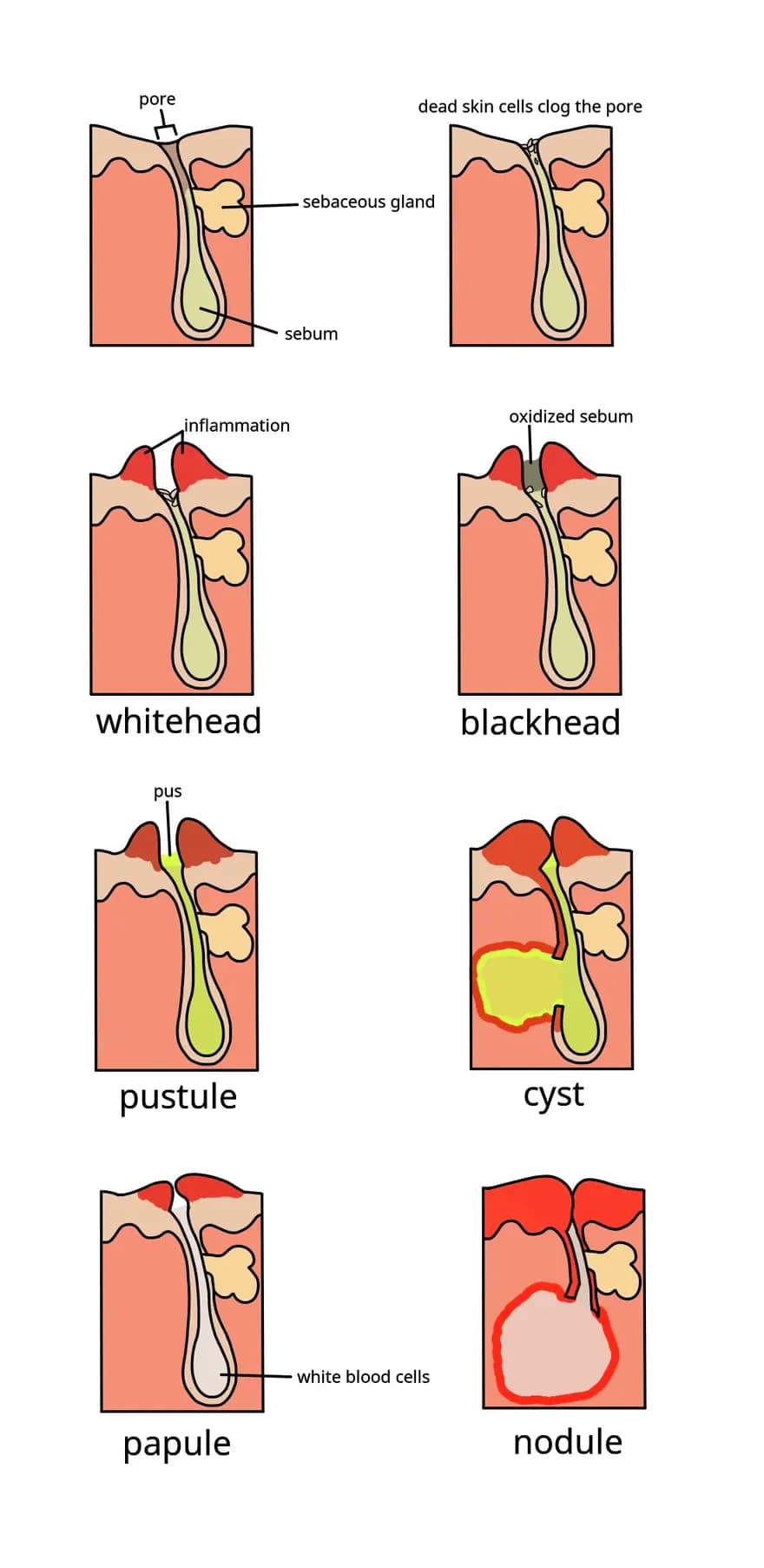
Acne results from a combination of four interrelated factors:
1. Excess Sebum Production Your sebaceous glands are regulated primarily by androgens (DHT and testosterone). This is why acne worsens during puberty and persists in adult males. If you're prone to oily skin, your glands are simply more responsive to hormonal signals. This isn't laziness; it's biology. Genetic predisposition determines sebum production rates; you cannot change the underlying sensitivity, but you can manage the output.
2. Dead Skin Cell Accumulation Your skin naturally sheds ~30,000 cells per minute. Normally, these slough off naturally. But in acne-prone skin, dead cells stick around inside the follicle due to increased keratin production, creating a plug that traps sebum and bacteria. This is why exfoliation (chemical, not physical) helps; it removes the plug before it becomes a lesion.
3. Bacterial Overgrowth Cutibacterium acnes (formerly Propionibacterium acnes) thrives in oxygen-poor, sebum-rich environments. It's not the bacteria itself that directly causes acne; it's your immune system's response to the bacteria and to the inflammatory by-products they release, such as the free fatty acids they produce when they break down sebum. This is why you can have plenty of bacteria on clean skin without acne, but the same bacteria in a blocked pore triggers an inflammatory response that you see as a pimple.
4. Inflammation Once the follicle is blocked and bacteria multiply, your immune system releases inflammatory cytokines (IL-6, TNF-α, IL-8). This creates the redness, swelling, and pustules visible on your skin. Some people's immune systems respond more aggressively to bacterial presence than others, which explains why two people with identical bacterial loads can have vastly different acne severity.
Common Triggers You Can Control
Diet and Glycemic Response
The relationship between acne and diet is real, though individual responses vary. High-glycemic foods (white bread, refined sugars, most processed foods) cause rapid insulin spikes, which can increase androgen activity and sebum production. Some research also suggests dairy may exacerbate acne in susceptible individuals, possibly due to hormones naturally present in milk that act on androgen receptors.
If you have moderate acne, try cutting high-glycemic foods and excess dairy for 4-6 weeks. Keep a photo log: if diet is a factor for your skin, improvement should be visible by the end of that window.
Skincare and Product Choices
Harsh or comedogenic products clog pores. Look for "non-comedogenic" labels and avoid heavy oils on the face (except on non-acne areas). Over-washing strips your skin of its acid mantle and natural protective oils, triggering rebound oiliness. Twice daily is sufficient; more is counterproductive.
Certain actives (vitamin C, niacinamide) are anti-inflammatory and can help; very heavy, oily creams and balms on the face can worsen congestion in acne-prone skin. Common silicones like dimethicone are generally non-comedogenic and fine. Choose products deliberately based on ingredient lists, not marketing.
Stress and Sleep
Stress raises cortisol and adrenal androgens and can impair the skin barrier, and many people notice flares during stressful periods. Chronic short sleep keeps stress hormones elevated and is linked with worse skin. A single bad night won't cause acne, but ongoing stress and poor sleep can make it worse. Aim for 7-9 hours nightly if acne-prone.
Manual Irritation
Touching, picking, or over-scrubbing introduces bacteria and mechanical trauma. This is the fastest way to turn a comedone into an infected pustule. Keep hands away from your face entirely.
Topical Treatments: The Tier System
Benzoyl Peroxide (2.5–10%)
This is your foundation treatment. Benzoyl peroxide is bactericidal; it actually kills C. acnes by generating reactive oxygen species inside the follicle. It's not prone to antibiotic resistance because the killing mechanism isn't selective; bacteria can't adapt to oxidative stress. Start at 2.5% (as effective as 10%, with fewer side effects) and apply once or twice daily to clean, dry skin.
Expect 4-6 weeks for visible improvement. You may experience temporary dryness or irritation in weeks 1-2; this is normal and usually resolves.
Salicylic Acid (0.5–2%)
A beta-hydroxy acid (BHA) that's fat-soluble, so it penetrates into sebum-filled pores. It exfoliates dead skin and reduces comedone formation. Works best for blackheads and whiteheads; less effective for inflammatory cystic acne. Use in a cleanser or toner, 1-2 times daily. Don't combine with other exfoliants initially; your skin needs time to adjust.
Retinoids (Retinol, Tretinoin, Adapalene)
Retinoids normalize skin cell turnover and reduce comedone formation at the source. They're also anti-inflammatory and boost collagen production (helping with post-acne texture). Over-the-counter retinol is weak. Adapalene 0.1% (Differin) is available without a prescription in many countries, including the US, and is a good first retinoid for acne; tretinoin (Retin-A) and stronger adapalene need a prescription. Whichever you use, introduce it slowly (start 2-3x weekly, build to nightly over 4-6 weeks).
Timeline to results: 8-12 weeks to see full effects. Expect temporary dryness and irritation during the first 4 weeks (retinization phase).
Azelaic Acid (15–20%)
Underrated and underused. Azelaic acid is bacteriostatic, anti-inflammatory, and helps with post-inflammatory hyperpigmentation (especially important for darker skin tones). It's generally gentler than retinoids and can be used alongside them, though it can sting or itch at first; introduce one product at a time.
Hormonal Acne and The Androgen Link
If your acne clusters around your jawline, chin, and neck, or flares predictably with your menstrual cycle, it's likely androgen-driven. Topical treatments help the surface, but systemic approaches may be necessary:
- Hormonal therapy is for women only. Combined oral contraceptives and spironolactone reduce the effect of androgens on the skin, but both are prescribed only to women.1 Spironolactone is not used for acne in men because its anti-androgen effects cause breast tissue growth and other feminizing side effects. For men with stubborn hormonally driven acne, the systemic options are a short course of oral antibiotics or isotretinoin (below).
- Dietary zinc (25-30mg daily) has modest evidence for reducing sebum production.
- Saw palmetto supplements have weak evidence but are low-risk to trial.
This is a dermatologist conversation, not something to self-manage.
Prescription Options (Moderate to Severe)
Topical Antibiotics + Benzoyl Peroxide
Clindamycin or erythromycin combined with benzoyl peroxide. The benzoyl peroxide prevents antibiotic resistance (which develops quickly with antibiotics alone). Typical duration: 8-12 weeks.
Oral Antibiotics
Doxycycline or minocycline for widespread inflammatory acne. These reduce bacteria and have anti-inflammatory effects independent of their antimicrobial action. Always combine with benzoyl peroxide to prevent resistance. These are short-term (3-6 months); long-term oral antibiotics are not advisable.
Isotretinoin (Accutane)
Reserved for severe, scarring, or treatment-resistant acne. It's the closest thing acne has to a cure: it shrinks the oil glands, and many people stay clear long-term after a full course, though some relapse and need a second course. Requires monthly blood work, strict pregnancy prevention (highly teratogenic), and management of dryness and photosensitivity. This is a serious commitment, but genuinely life-changing for severe cases.
Scar Prevention and Treatment
Prevention is the goal. Minimize inflammation early and don't pick or extract lesions; hydrocolloid patches on active spots help by keeping your hands off them. (Silicone gel or sheets are a different tool, used on raised scars once they've formed.) For existing scars: microneedling (1.5–2.0mm, monthly) stimulates collagen remodeling; laser resurfacing (fractional CO2) vaporizes scar tissue; chemical peels (TCA 20-30%) help with superficial scarring. These belong with a dermatologist. Costs vary widely by procedure and location: microneedling and peels are usually a few hundred dollars per session, while fractional laser resurfacing can run into the thousands.
Lifestyle Management
- Sleep: Aim for 7-9 hours nightly.
- Hydration: drink enough to stay normally hydrated. Extra water beyond that hasn't been shown to clear acne.
- Pillowcase hygiene: Change weekly; bacteria accumulates.
- Avoid heavy cosmetics: If you wear foundation, choose oil-free, non-comedogenic formulas.
- Manage stress: Exercise, meditation, or therapy. Chronically elevated cortisol worsens acne.
Treatment Timeline Expectations
| Week | OTC Routine | Prescription |
|---|---|---|
| 0-2 | Dryness, possible purging | Irritation, purging |
| 2-4 | Mild improvement | Noticeable drying |
| 4-8 | Continued improvement | Significant improvement |
| 8-12 | Plateau (good results) | Most acne resolved, scarring visible |
Purging (temporary worsening in weeks 1-3) is normal with retinoids and some actives; your skin is shedding old, damaged cells.
Final Word
Start simple: a gentle cleanser, benzoyl peroxide, and a basic moisturizer. Be consistent for 8-12 weeks before escalating. If acne is widespread, scarring, or psychologically impactful, see a dermatologist. Combination therapy (topical + oral) works better than single agents. And manage the controllables (sleep, diet, stress), because they genuinely matter.
Frequently Asked Questions
What actually works best for acne? The strongest evidence supports topical benzoyl peroxide, topical retinoids, topical antibiotics, and oral doxycycline, and combinations of these, with oral isotretinoin reserved for severe, scarring, or treatment-resistant acne.12 Topical antibiotic monotherapy is not recommended because it drives resistance; pair antibiotics with benzoyl peroxide.1
How long before I see results? Give any routine 8–12 weeks before judging it. Early "purging" in the first few weeks is common with retinoids. Escalate only after a consistent trial.
Do diet and dairy really cause acne? Diet can influence acne in some people, but the current guideline position is that evidence for dietary changes as a treatment is limited; so treat diet as an individual variable to test, not a primary therapy.12 The core treatments above have far stronger support.
Are lasers, peels, and microneedling proven for acne? For active acne, the evidence for procedures like chemical peels, lasers, and microneedling was judged insufficient to make strong recommendations.12 They're more relevant to scarring (see the scar section above) and should be a dermatologist conversation.
When should I see a dermatologist? If acne is widespread, scarring, cystic, or affecting you psychologically, or if OTC treatment stalls after a proper trial: prescription options (including hormonal therapy and isotretinoin) require medical supervision.
Related Reading
- Skincare fundamentals: build the routine that supports acne treatment
- Chronic cortisol & the puffy face: the stress-skin link
- Insulin, fat & facial definition: the glycemic angle
- Dark circles: causes & solutions
References
Footnotes
-
Reynolds RV, Yeung H, Barbieri JS, et al. Guidelines of care for the management of acne vulgaris. Journal of the American Academy of Dermatology. 2024. (18 evidence-based recommendations: strong support for benzoyl peroxide, topical retinoids, topical antibiotics, and oral doxycycline; isotretinoin for severe/resistant acne; combined oral contraceptives and spironolactone for female patients; benzoyl peroxide alongside any antibiotic to prevent resistance; evidence insufficient for procedures and dietary changes.) https://www.jaad.org/article/S0190-9622(23)03389-3/fulltext ↩ ↩2 ↩3 ↩4 ↩5
-
American Academy of Dermatology. Updated guidelines for the management of acne (summary). 2024. https://www.aad.org/news/updated-guidelines-acne-management ↩ ↩2 ↩3