Improving Your Eye Area: What Actually Works (and What Doesn't)
The eyes are the part of the face people look at most, so the area around them carries real weight in first impressions. The good news is that the highest-impact improvements are simple and safe: look rested, keep the skin healthy, and frame the eyes well. This guide covers those — and is honest that several popular "eye area" techniques (eye exercises to reshape the eye, posture routines to "grow" bone around the orbit) don't have evidence behind them.
Medical note: This is informational, not medical advice. The eye area is delicate; anything near the eye — needling, medications, lenses — carries risk. When in doubt, see a professional.
Start with the things that genuinely move the needle
Look rested
More than any gadget, being visibly rested improves the eye area. Sleep-deprived faces are reliably rated as more tired, less healthy, and less attractive, and the under-eye region — puffiness, shadowing, dull sclera — is a major part of that signal.1 Consistent good sleep, hydration, and moderating alcohol do more for your eyes than most products. (For under-eye darkness specifically, see the dark circles guide; for puffiness, see debloating your face.)
Clear, bright sclera
Yellow or bloodshot whites make you look tired regardless of everything else. Lubricating drops when your eyes are dry, good hydration, and sleep keep the sclera clear, which sharpens the contrast around the iris and makes the eyes read brighter — without changing their actual color.
Skin quality around the eyes
A retinoid builds collagen and improves skin texture over time, which supports the thin under-eye skin; introduce it cautiously and at low frequency here because the area is sensitive (see the skincare guide). Daily sunscreen protects this skin from the UV damage that thins it and deepens pigment.
Framing: the fastest visual wins
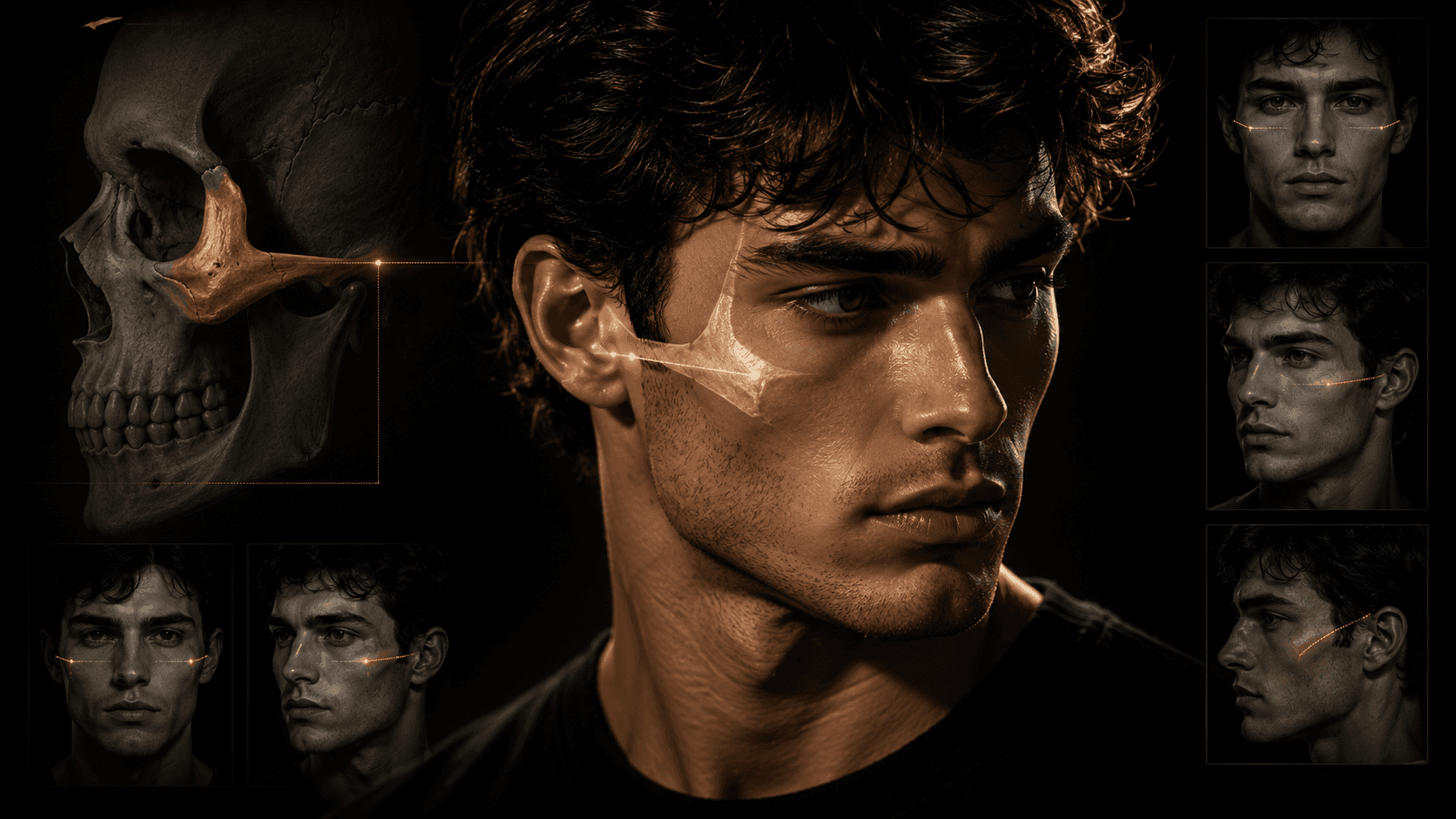
You can't change your eye's bone structure (that's covered honestly in the facial structure guide), but framing dramatically changes how the eyes read:
- Contrast. Eyes stand out when the surrounding features frame them. If brows and hair blend into your skin tone, the eyes look washed out; darkening brows or hair even slightly can make them more defined.
- Brow shape. Well-groomed brows frame the eyes and are one of the highest-return grooming changes (see brows below).
- Lashes. Curling lashes opens up the eye and sharpens its shape — a quick, low-cost improvement, especially if your lashes point downward.
- Expression. A steady, engaged gaze and a relaxed (not tense or wide-eyed) expression read better than a strained one. Actors train these deliberately; you can practice a calm, level gaze in a mirror.
Colored contacts (optional)
These work best amplifying what's already there rather than disguising it — a shade about one step from your natural color looks most natural. Daily lens wear carries genuine eye-health risk, so follow strict hygiene and consider limiting colored lenses to occasional use.
Eyebrows: the biggest framing lever
Brows frame the whole upper face. The essentials:
Grooming and shape.
- Brush brows up, trim only the longest stray hairs, and pluck only clear outliers — trim slowly, since you can't put hair back.
- For men, straight-to-slightly-arched natural brows generally look strong; avoid over-thinning or heavy arching.
- Symmetry and following your natural brow line matter more than "perfect" shape.
Growing sparse brows.
- Rosemary oil is the one home remedy with some real support — a randomized trial found it comparable to topical minoxidil for androgenetic alopecia over several months, and it's plausibly helpful for brow density, though brow-specific evidence is thin.2 Massage a few drops (diluted in a carrier oil) into the brows a few nights a week; expect slow results.
- Minoxidil can thicken sparse brows over time, but it's a medication — read the guidance and get advice before using it near the eyes.
- Castor and coconut oil are popular but essentially unproven for growth; they mostly condition the hair. No harm, low expectations.
- Diet supports hair generally (protein, healthy fats), but won't transform sparse brows on its own.
What doesn't work (and why)
Being honest here saves you time and risk:
- "Eye exercises" to reshape the eye or lift the lid. Squeezing, lifting, or training the muscles around the eye does not change eye shape, lift hooding, or create a more "hunter" eye — there's no good evidence for durable structural change, and eye shape is set by bone and soft-tissue anatomy. At best these are transient. Skip them.
- Posture routines to "grow" bone around the orbit. Good posture is worth having for your overall appearance and health (see the posture guide), and looking rested and upright helps how you present. But the claim that neck posture repositions the frontal bone or "cranial base" to improve the eye area isn't established — it conflates general posture benefits with a bone-growth mechanism that doesn't happen in adults. Fix your posture for the real reasons, not this one.
- Derma-rolling the orbital area at home. Needling right around the eye is higher-risk and not a beginner move; the skin is thin and the eye is close. If you want microneedling near the eyes, that's a clinician's job, not a DIY one.
Realistic expectations
- The reliable wins are rest, skin quality, and framing — unglamorous but genuinely effective.
- Structure is fixed; you're optimizing presentation, not rebuilding the orbit.
- Be skeptical of anything promising to reshape your eyes through exercises or posture.
- Anything involving medication or needling near the eye deserves caution and, ideally, a professional's input.
Get good sleep, keep the skin healthy, frame the eyes with well-groomed brows and good contrast, and you'll capture almost all of the achievable improvement — safely.
References
Footnotes
-
Axelsson J, Sundelin T, et al. Beauty sleep: experimental study on the perceived health and attractiveness of sleep deprived people. BMJ (2010);341:c6614. https://doi.org/10.1136/bmj.c6614 ↩
-
Panahi Y, et al. Rosemary oil vs minoxidil 2% for the treatment of androgenetic alopecia: a randomized comparative trial. SKINmed (2015). https://pubmed.ncbi.nlm.nih.gov/25842469/ (Scalp-hair evidence; brow-specific data are limited.) ↩