Hunter Eyes: What They Actually Are and What You Can Change
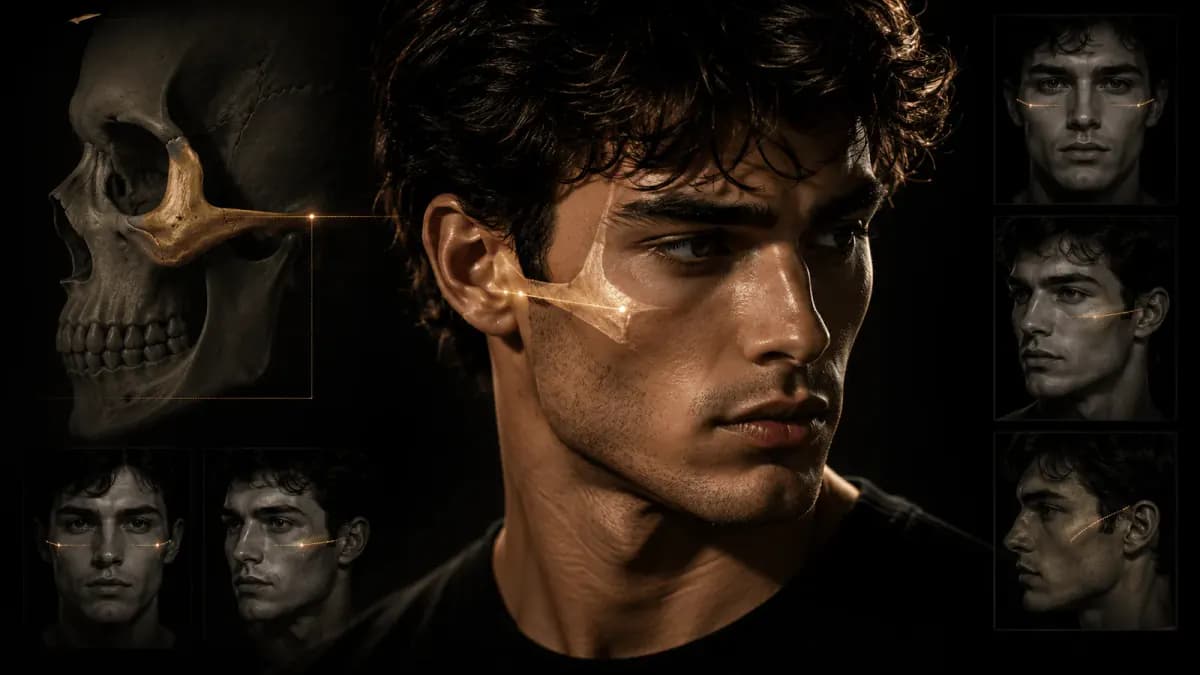
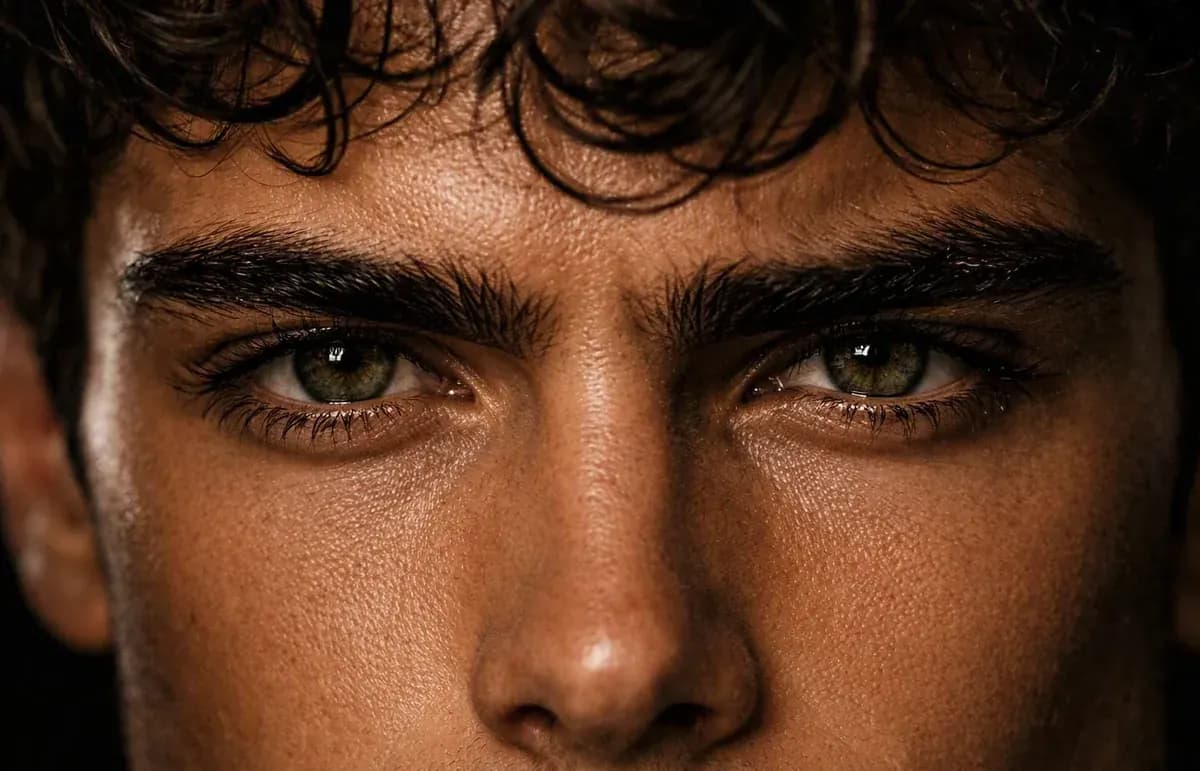
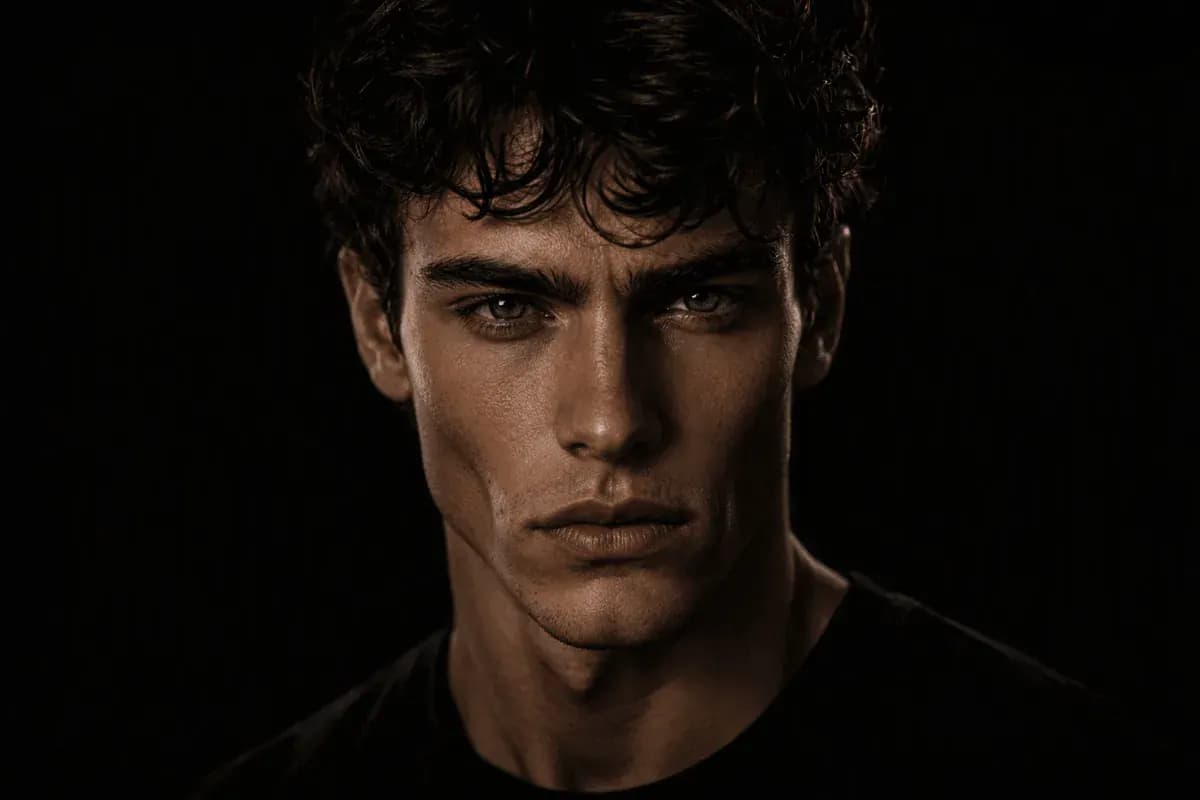
Hunter eyes is internet slang for a deep-set, hooded-looking male eye: a low, straight brow sitting close to the eye, little visible upper eyelid, a slight upward tilt at the outer corner, and firm support underneath. It isn't a medical term, and it isn't one feature. It's a bundle of several, and most of them are set by your bone structure.
You can't train, squint or "mew" your way into hunter eyes, and nothing makes them appear "in a week" or "permanently." What you can do is change how the area presents: brow shape, puffiness, under-eye darkness and body fat all move the read in the right direction.
This guide breaks the look into its parts, sorts them into what's bone and what's soft tissue, and is clear about where the research is solid and where it barely exists.
Short answer: hunter eyes are mostly brow ridge, orbit shape and the tendon that anchors your outer eye corner. Those don't change in adults without surgery. Brow grooming, sleep, less fluid retention and getting leaner improve how the eye area reads, but they frame the eyes you have rather than rebuilding them.
What "hunter eyes" means (and the "prey eyes" contrast)
The term comes from looksmaxxing forums, borrowing a loose animal analogy: predators have forward-facing, narrowed-looking eyes, prey animals have wide, exposed ones. Applied to human faces, it goes like this:
| "Hunter eyes" | "Prey eyes" | |
|---|---|---|
| Brow | Low, straight, close to the eye | Higher, more arched |
| Upper eyelid | Little or none visible below the brow fold | Lots of visible lid |
| Eye set | Deeper-set under a projecting brow ridge | Flatter, more exposed |
| Outer corner | Neutral to slightly upturned | Neutral to downturned |
| Under the eye | Firm, flat support | Hollow, puffy or shadowed |
| Common read | Intense, focused, serious | Open, soft, approachable |
Two things to keep in mind. First, the animal analogy is just a metaphor: human eye shape has nothing to do with predator vision. Second, "prey eyes" is not a flaw. Wide, open eyes read as friendly and are common in attractive faces. The labels describe a style of eye area, not a ranking.
The parts that make it up
The brow ridge (supraorbital ridge) is the bony shelf above the eye. A more projecting ridge shades the eye and pushes the brow lower and forward. It grows through puberty and is typically larger in men. The facial structure guide covers strong vs weak brow ridges in more detail.
Then there's brow position and shape. In a study of 222 men, the male brow sat along the brow ridge with a flat contour, and men with deeper-set eyes had lower-sitting brows.1 When adults were asked what brow position looks best, men's ideal was a lower brow with a lower tail and a less pronounced peak than women's.2 So a low, flat brow is the typical male pattern, not a rare trait.
Upper-eyelid exposure is the amount of eyelid you can see between the lash line and the brow fold. Low exposure is the core of the "hooded" hunter look. Be aware that this part has very little direct research on attractiveness in men. Surgeons measure it, but no good study shows how much eyelid show men "should" have.
Canthal tilt is the angle from the inner to the outer eye corner. A slight positive tilt is typical in most adults, so it's less special than forums suggest. The full measuring method and population ranges are in the canthal tilt guide.
Under-eye support finishes the look. Firm cheekbones and a smooth lid-cheek junction make the lower eye look tight. Hollows, bags or dark circles undo much of the effect.
What the research says about how these features read
The evidence here is thin and mostly uses edited photos, so treat it as direction rather than proof.
Mature features read as dominant. In a classic 1985 study using composite faces built from police Identi-Kit parts, more mature-looking eyebrows, eyes, lips and jaws generally raised both dominance and attractiveness ratings for male faces.3 It's an old study with artificial faces, but it's the origin of the "masculine brow reads dominant" idea.
Brow shape seems to matter more than brow height. In a study where one youthful face was digitally altered and rated by 20 people, brow shape influenced perceived expression more than absolute brow position. A drooping outer brow and a lowered upper lid made the face look more tired, and a lowered inner brow made it look angry.4 That's a useful warning: the hunter look depends on a low brow that stays level, not one that sags at the tail or pinches in the middle.
Exaggerating the tilt can backfire. In the largest rating study so far, 2,081 people rated an edited unisex face. Raising the outer eye corner lowered attractiveness and trustworthiness and raised dominance and threat ratings. Raising the brows raised dominance and masculinity ratings but also lowered attractiveness.5 One face, one study, but it cuts against the idea that more tilt is always better.
The overall picture: features in the hunter-eye bundle can read as intense or dominant, but "more intense" is not the same as "more attractive." Balance with the rest of your face matters more than any one trait.
What's bone, what's soft tissue: the can/can't-change table
| Feature | What sets it | Can you change it without surgery? |
|---|---|---|
| Brow ridge projection | Frontal bone | No |
| Eye depth (how deep-set) | Orbit shape, brow ridge, orbital fat | No |
| Canthal tilt | Orbit shape, lateral canthal tendon | No (photos and puffiness change the apparent tilt only) |
| Cheekbone support under the eye | Zygomatic bone | No |
| Brow shape and fullness | Hair, grooming | Yes |
| Brow height | Bone, soft tissue, forehead muscle | Slightly, through grooming that shifts the visual line |
| Upper-eyelid exposure | Brow position, lid skin, fat, swelling | Slightly, mostly through less puffiness |
| Puffiness and swelling | Sleep, sodium, alcohol | Yes, within days |
| Dark circles | Vessels, pigment, structure | Partly, depending on the type |
| Facial fat | Body fat | Yes, over months |
The pattern is clear. The parts that make the look structural are bone. The parts you control are framing and soft tissue.
What you can actually influence
Brow grooming is the highest-return lever. Keep the brow full and fairly straight, clean up strays below the brow and between the brows, and don't thin or arch it. Over-plucking the underside raises the visual brow line and shows more eyelid, which is the opposite of what you want. A sagging or sparse tail can be balanced by keeping the outer third full. The lashes and brows guide covers grooming and growing sparse brows, and improving your eye area covers framing and contrast.
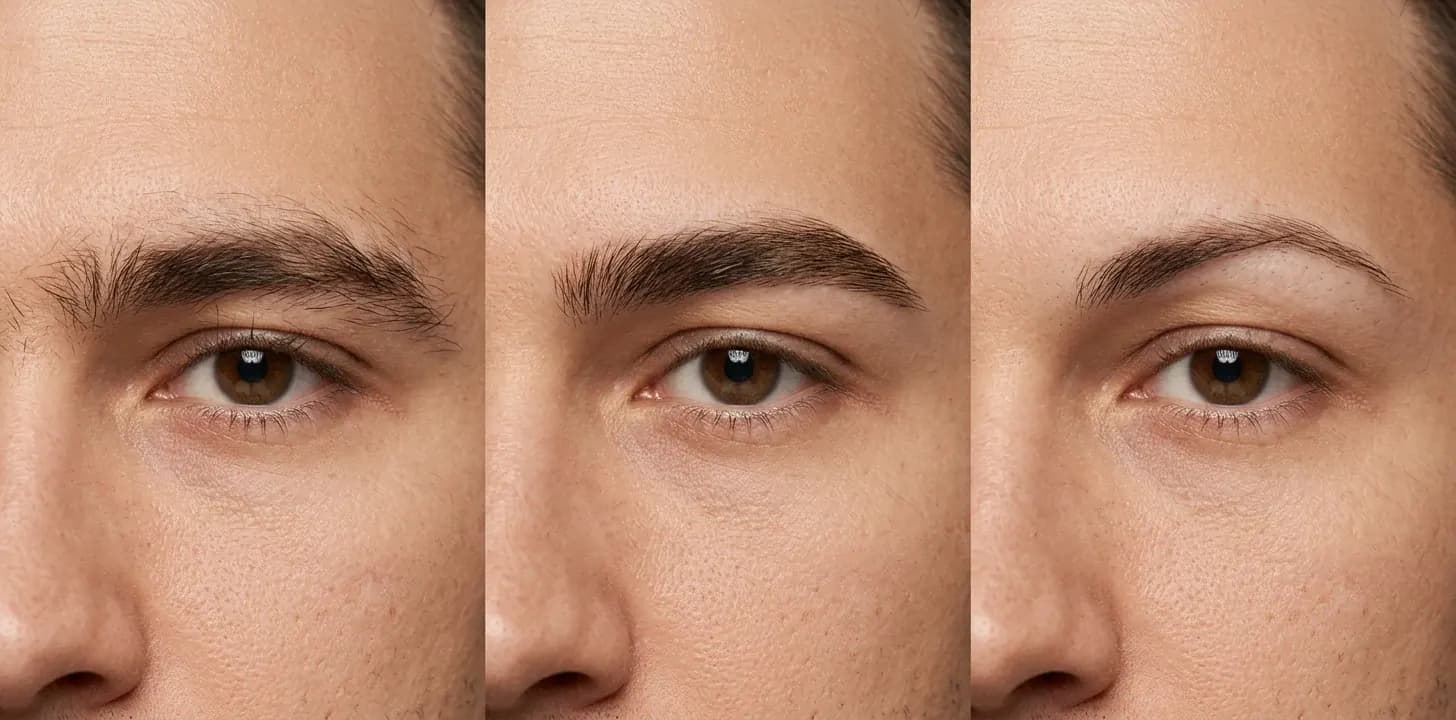
Sleep comes next. In a study where people were photographed after normal sleep and after 31 hours awake, the sleep-deprived faces were rated as having more hanging eyelids, swollen eyes, redder eyes and darker under-eye circles.6 Every one of those works against the hunter look. Consistent sleep is covered in the sleep guide.
Fluid retention is the third. Swollen lids add volume above and below the eye, hiding the crease and blurring the outer corner. High sodium, alcohol and short sleep are the usual causes. The debloating guide explains what reverses it, usually within days.
Dark circles work the same way: shadows and pigment under the eye make the area look hollow and tired. The fix depends on the type, which the dark circles guide walks through.
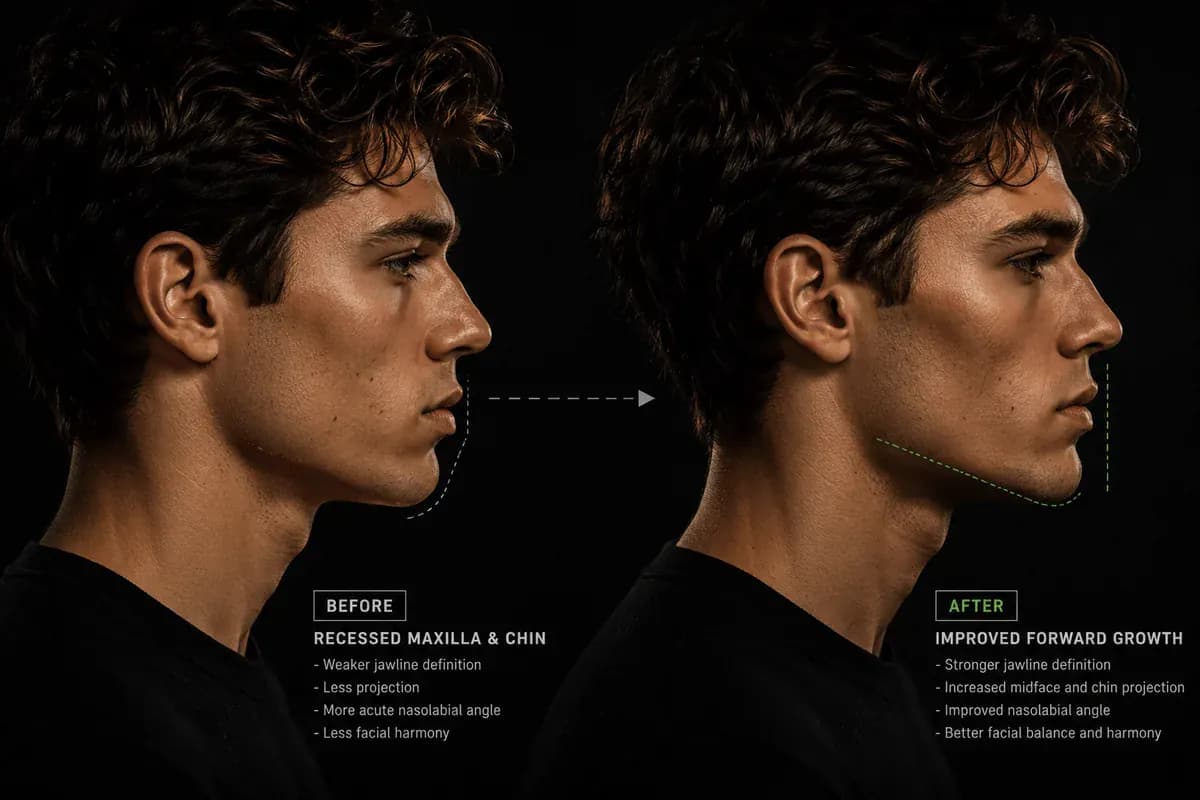
Last is body fat. Getting leaner makes the whole face look more defined, including the brow and cheekbones that frame the eye. See body fat and facial definition. There is a limit, though: there's no direct research showing that fat loss makes eyes more deep-set. A 2025 review of rapid weight loss on GLP-1 drugs noted that no study has measured changes in orbital fat, and that fast, large weight loss can cause hollowing around the eyes.7 Lean helps; crash dieting can make the eye area look gaunt rather than sharp.
What doesn't work
Eye exercises don't work. No study shows that squeezing, lifting or training the muscles around the eye changes brow position, lid exposure or canthal tilt. The structures that define the look are bone and tendon.
Neither does "eye mewing." Tongue posture doesn't move your orbits or your outer eye corner. Claims about pushing the cheekbones up to "lift" the eye have no evidence in adults. The mewing guide explains why the adult bone claims don't hold up in general.
Squinting is a pose, not a fix. Narrowing your lower lids slightly (the photographer's "squinch") can make you look more focused in a photo, but holding a squint all day reads as tense or suspicious, and it does nothing to your anatomy.
Taping the outer corner changes nothing once the tape comes off. Hitting your brow or cheekbones to "build bone" is dangerous and unsupported. Skip both.
Be wary of anything promising hunter eyes "in a week" or "permanently." Nothing non-surgical produces hunter eyes in a week. What you can get in a week is less puffiness and better-groomed brows. "Permanent" is only on the table with surgery, and surgery has its own trade-offs.
Surgery and its trade-offs
Several procedures change parts of the eye area. All of them are real surgery, and none should be chosen to chase a forum label.
| Procedure | What it changes | Main trade-offs |
|---|---|---|
| Upper blepharoplasty | Removes or repositions excess upper-lid skin, fat and muscle | Bruising, dry eyes for a few weeks, scarring, and risk of the lid not closing fully if too much skin is removed89 |
| Brow lift | Repositions a drooping brow | Usually raises the brow, which is the opposite of the hunter look; used for true brow droop |
| Lateral canthoplasty | Repositions the outer eye corner | Complications are "not uncommon," including a misshapen corner, relapse, outward-turning lid and exposed lining10 |
| Brow bone augmentation | Adds projection to the brow ridge | Implant surgery with its own risks; little outcome research |
Two points worth knowing. Cleveland Clinic notes that eyelid surgery can alter your appearance but usually doesn't dramatically change it.9 And in the brow study above, simulating upper-lid skin removal unexpectedly made the face look more tired.4 Removing lid skin doesn't automatically create a hooded, intense look.
If you have true hooding that blocks your vision or a brow that has genuinely dropped, see a board-certified oculoplastic surgeon (an eye doctor who specializes in eyelids) or a facial plastic surgeon. On the NHS, upper-lid surgery is funded only when excess skin impairs vision, which is confirmed with a visual field test.8
Realistic expectations
- Your baseline is set. If you don't have a projecting brow ridge, you won't get one from habits.
- The changeable part is presentation. Grooming and less puffiness can make a noticeable difference within days to weeks. Fat loss takes months.
- The ceiling is "your best eye area," not someone else's. Many attractive men have open, "prey" eyes.
- Watch for medical signs. A lid that droops suddenly or on one side, or one that gets worse through the day, needs an eye doctor, not a grooming routine.
Frequently Asked Questions
What does hunter eyes mean? It's slang for deep-set eyes with a low, straight brow, little visible upper eyelid and a slightly upturned outer corner. It describes a look, not a medical feature.
Hunter eyes vs prey eyes: what's the difference? Hunter eyes are hooded and deep-set under a low brow. Prey eyes are wider and more exposed, with a higher brow and more visible lid. Neither is automatically more attractive.
How do you get hunter eyes naturally? You can't change the bone, but you can improve how the area reads: keep brows full and straight, sleep consistently, cut back on salt and alcohol to reduce puffiness, treat dark circles by type, and get leaner gradually.
Can you get hunter eyes permanently? Only surgery changes the structures permanently, and it carries real risks. Non-surgical improvements last as long as you keep doing them.
Do you need a positive canthal tilt for hunter eyes? No. A slight positive tilt is common and fits the look, but brow position and eyelid exposure matter more. Pushing the tilt higher reads as threatening rather than attractive in the best available study.5
Are hunter eyes a male trait? The features behind the look, a stronger brow ridge and a lower, flatter brow, are more typical in men.12 But plenty of men don't have them, and that's normal.
The bottom line
Hunter eyes are a real look but mostly a skeletal one: brow ridge, orbit shape and the outer corner tendon set the foundation, and none of those change in adults without surgery. The levers you control are framing and soft tissue: full, straight, well-groomed brows, consistent sleep, less fluid retention, the right fix for your dark circles, and steady fat loss. Skip exercises, eye mewing, taping and anything promising results in a week. Aim for the best version of your own eye area, not a forum template.
References
Footnotes
-
Goldstein SM, Katowitz JA. The male eyebrow: a topographic anatomic analysis. Ophthalmic Plastic and Reconstructive Surgery (2005);21(4):285-291. https://pubmed.ncbi.nlm.nih.gov/16052142/: In 222 men, the brow followed the brow ridge with a flat contour, and deeper-set eyes went with lower brows. ↩ ↩2
-
Sclafani AP, Jung M. Desired position, shape, and dynamic range of the normal adult eyebrow. Archives of Facial Plastic Surgery (2010);12(2). https://vivo.weill.cornell.edu/display/pubid20231595: Men's preferred brow was lower, with a lower tail and a less accentuated peak than women's. ↩ ↩2
-
Keating CF. Gender and the physiognomy of dominance and attractiveness. Social Psychology Quarterly (1985);48(1):61-70. https://psych.colgate.edu/~ckeating/Selected%20publications/Gender%20&%20the%20Physiognomy%20of%20Dominance.pdf: In Identi-Kit composite faces, mature eyebrows, eyes, lips and jaws generally raised dominance and attractiveness ratings for male faces. ↩
-
Knoll BI, Attkiss KJ, Persing JA. The influence of forehead, brow, and periorbital aesthetics on perceived expression in the youthful face. Plastic and Reconstructive Surgery (2008);121(5):1793-1802. https://pubmed.ncbi.nlm.nih.gov/18454005/: Brow shape affected perceived expression more than brow height; a drooping outer brow and lowered lid read as tired. ↩ ↩2
-
Kempa J, Kasielska-Trojan A, Gabryszewski M, et al. Understanding the impact of eyebrow and lateral canthal height on the perception of character traits: A rating-based analysis of 2081 participants. Journal of Plastic, Reconstructive & Aesthetic Surgery (2025);104:417-425. https://pubmed.ncbi.nlm.nih.gov/40174260/: Raising the outer eye corner lowered attractiveness and trustworthiness and raised dominance and threat ratings. ↩ ↩2
-
Sundelin T, et al. Cues of fatigue: effects of sleep deprivation on facial appearance. Sleep (2013);36(9):1355-1360. https://academic.oup.com/sleep/article/36/9/1355/2453883: After 31 hours awake, faces were rated as having more hanging eyelids, swollen and red eyes, and darker circles. ↩
-
Kapantais D, Tsoutsanis P. Functional and Aesthetic Periorbital, Ocular Adnexal and Ocular Surface Changes Linked to GLP-1 Receptor Agonists. Journal of Clinical Medicine (2025);14(24):8792. https://pmc.ncbi.nlm.nih.gov/articles/PMC12733712/: Rapid weight loss can cause periocular hollowing; no study has yet measured orbital fat changes. ↩
-
Cambridge University Hospitals NHS Foundation Trust. Blepharoplasty (patient information). (2025). https://www.cuh.nhs.uk/patient-information/blepharoplasty/: Lists bruising, dry eyes and incomplete closure if too much skin is removed; NHS funds upper-lid surgery only when vision is impaired. ↩ ↩2
-
Cleveland Clinic. Eyelid Surgery (Blepharoplasty). https://my.clevelandclinic.org/health/treatments/8409-eyelid-surgery-blepharoplasty: Risks include dry eyes, scarring and vision problems; surgery changes appearance but typically not dramatically. ↩ ↩2
-
Kim YJ, Lee KH, Choi HL, Jeong EC. Cosmetic Lateral Canthoplasty: Preserving the Lateral Canthal Angle. Archives of Plastic Surgery (2016);43(4):316-320. https://pmc.ncbi.nlm.nih.gov/articles/PMC4959973/: Complications after cosmetic lateral canthoplasty are not uncommon, including corner deformity, recurrence and ectropion. ↩