How to Look Less Tired: What Actually Changes in a Tired Face (for Men)
If you want to know how to look less tired, start with what other people actually notice. In controlled studies, the same faces photographed after a night of no sleep were read as more tired mainly because of a handful of specific cues: hanging eyelids, swollen and red eyes, dark circles, paler skin, and drooping mouth corners. Fix or soften those, and you look more rested. Ignore them, and no amount of moisturizer helps.
Most advice on this topic is written for women and leans on concealer. This guide is the men's, no-makeup version: what the research found, what you can do in ten minutes this morning, and what actually removes the tired look over weeks.
Short answer: Cold on the eyes, lubricating eye drops, a cleanly groomed face, upright posture, and daylight will take the edge off a tired face today. Sleep, less alcohol, and daily sunscreen are what stop you looking tired by default. Persistent tiredness you can see and feel is worth a doctor's visit.
What people actually read as "tired" (the study findings)
The best evidence comes from a small Swedish research group that photographed the same people rested and sleep-deprived, then had strangers rate the photos.
The original "beauty sleep" study. Twenty-three young adults were photographed after a normal eight-hour night and again after 31 hours awake following a short night. Sixty-five untrained observers rated the sleep-deprived photos as more tired, less healthy, and slightly less attractive.1 The differences were statistically clear but modest on a 100-point scale (tiredness rose from about 44 to 53, attractiveness dropped from about 40 to 38). Other people notice, but you don't turn into a different person.
Which cues drive it. A follow-up study broke the tired face into parts. Ten people (five men, five women) were photographed rested and after 31 hours awake, and 40 observers rated specific features.2 Sleep deprivation increased ratings of:
| Cue | Rough size of change (100 mm scale) | What it looks like |
|---|---|---|
| Hanging eyelids | +15 (largest) | Heavy upper lids, eyes look half open |
| Droopy mouth corners | +11 | Neutral face reads as flat or sad |
| Swollen eyes | +10 | Puffy lids and under-eyes |
| Dark circles | +7 | Shadowing under the eyes |
| Wrinkles and fine lines | +7 | Under-eye and forehead lines more visible |
| Red eyes | +5 | Pink or bloodshot whites |
| Pale skin | +3 (smallest) | Flatter, grayer complexion |
Every one of these was linked to how fatigued the person looked, and sleep-deprived faces also read as sadder. The authors are upfront about limits: a tiny, all-Swedish sample, lab lighting, and neutral expressions. Treat the ranking as a useful map, not a law.
It's not only all-nighters. A third study restricted 25 people to about four hours in bed for two nights, which is closer to a rough work week. Raters judged them sleepier, less healthy, less attractive, and were less willing to socialize with them, though the effects were small.3
The practical takeaway: the eyes do most of the work, then the mouth, then skin color. That's the order to fix things in. The full picture of how sleep affects your looks over months is in the sleep and appearance guide.
Quick fixes for today: cold, caffeine, light, posture, hydration
None of these replace sleep. They soften the cues above for a few hours.
Cold. Cold narrows blood vessels and reduces swelling. Cleveland Clinic suggests lying down with a cold, water-soaked washcloth over your eyes for a few minutes, or an ice pack or frozen vegetables wrapped in a towel.4 Don't put ice straight onto the thin under-eye skin. A splash of cold water on the whole face does a milder version of the same thing.
Caffeine. A coffee won't change your face directly, but it makes you more alert, and alert people hold their eyes more open and their expression more animated, which addresses the two biggest cues. Caffeine eye creams are mentioned by Cleveland Clinic as possibly reducing puffiness,4 but evidence for them is thin. If you use one, expect a small, temporary effect at best.
Light. Get outside or near a bright window soon after waking. Bright morning light helps you feel awake, and good lighting also matters for how you look: overhead bathroom light carves shadows under your eyes that daylight from the front fills in. This is a practical point, not a studied one.
Posture. Slumped shoulders and a forward head make a tired face look more defeated. Standing tall and keeping your chin level costs nothing. See the posture guide if forward head posture is a habit.
Hydration. Drinking water after a night of drinking or a dry flight is sensible, but there's no good research showing extra water makes a normal face look less tired. Drink to thirst and don't expect visible miracles.
Eyes: lids, dark circles, puffiness
Since the eye area carried the biggest effects in the studies, it gets the most attention.
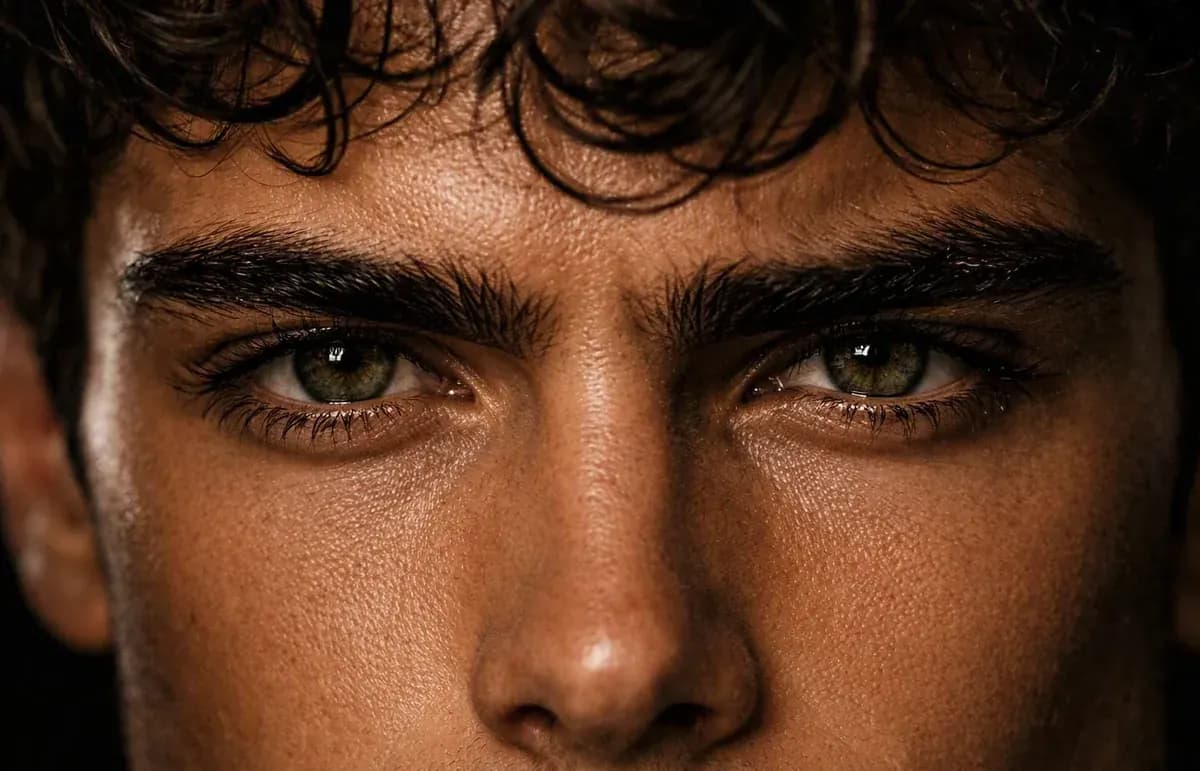
Hanging lids. This was the strongest cue, and there's no product for it. It's partly muscle fatigue and partly fluid in the lids. What helps: cold, being properly awake (caffeine, light, movement), and, longer term, sleep. If your upper lids hang even when rested and they block your vision, that's a medical question (see the last section).
Red eyes. The American Academy of Ophthalmology lists tiredness, dry eyes, allergies, smoke, and contact lens irritation as common causes.5 Its advice is clear: preservative-free lubricating drops (artificial tears) are the safer everyday choice, and decongestant "redness relief" drops should be used only occasionally and for no more than 72 hours, because they can cause rebound redness. Brimonidine-based drops carry a lower rebound risk. Take contacts out on a rough morning if your eyes are irritated.
Puffiness. Morning eye puffiness is mostly fluid that settles around the eyes overnight, made worse by salt, alcohol, allergies, and poor sleep. Cleveland Clinic recommends a cold compress, cutting back on salt, 7 to 9 hours of sleep, and raising your head slightly with an extra pillow.4 The full set of causes and fixes is in why is my face puffy.
Dark circles. These come in different types (vascular, pigmented, structural hollows, thin skin), and a bad night mainly worsens the vascular kind. Cold helps a little with that type; nothing at home fixes a hollow under the eye. Figure out which type you have with the dark circles guide, and for the eye area more broadly see improving your eye area.
Skin and color: the "pale and dull" signal
Pale skin was the smallest cue in the sleep study, but color matters to how healthy a face looks. In an experiment where people adjusted the skin color of face photos to make them look as healthy as possible, they consistently added more of a healthy, oxygenated-blood flush, and the palest faces got the biggest boost.6 A flat, grayish complexion reads as unwell; a bit of natural color reads as healthy.
What raises it without makeup:
- Movement. A short walk, a few minutes of exercise, or a cold rinse brings blood to the skin for a while.
- Moisturizer. Dry, flaky skin scatters light and looks dull. A plain moisturizer makes the surface look smoother. A basic routine is in the skincare guide.
- Don't overdo the sun to "fix" pallor. A tan is sun damage, and the long-term cost is covered below.
How much contrast and color your face has to begin with is largely genetic. If you look washed out in certain clothes, the coloring and contrast guide explains why and what to wear instead.
Grooming that reads as rested
The studies used neutral, ungroomed faces, so grooming wasn't tested. But it's the cheapest way to look put-together, and "put-together" and "exhausted" are hard to read on the same face.
- Beard or stubble edges. Ragged stubble looks like you rolled out of bed. Either shave cleanly or keep a deliberate, trimmed length with a clean neckline.
- Brows. Clean up stray hairs between and above the brows so the eye area looks open. Don't thin or arch them; just tidy.
- Hair. Messy, flat hair amplifies a tired face. Thirty seconds with water and a bit of product helps.
- Lips. Cracked, pale lips add to the drained look. A plain balm fixes it in a day or two.
- Expression. Since drooping mouth corners were the second-biggest cue, a relaxed, slightly engaged expression matters. You don't need to grin; just don't let your face go slack.
A 10-minute morning routine for men
A simple order that hits the main cues:
- Minutes 0 to 2: Drink a glass of water and open the curtains or step outside for daylight.
- Minutes 2 to 5: Cold washcloth or wrapped ice pack over closed eyes for a few minutes. Lie down if you can.
- Minutes 5 to 6: Splash your face with cool water, wash, and apply a basic moisturizer, then sunscreen if you'll be outside.
- Minute 6 to 7: Artificial tears if your eyes are red or gritty.
- Minutes 7 to 9: Tidy stubble edges, brows, and hair. Lip balm.
- Minute 10: Coffee if you drink it, stand up straight, and get moving.
Expect this to make you look noticeably fresher, not like you slept eight hours. It reduces puffiness and redness and gets you alert; it can't add back the sleep.
Long-term: sleep, alcohol, sun
If you look tired most days, quick fixes are a patch. Three habits do the real work.
Sleep. The studies show the tired look shows up after a single all-nighter and after just two short nights. Getting seven or more hours consistently is the one fix that addresses every cue on the list at once. How to actually sleep better is covered in the sleep and appearance guide.
Alcohol. Alcohol fragments sleep and promotes fluid retention. In a large survey of 3,267 women, moderate and heavy drinking were both linked to more under-eye puffiness, and heavy drinking (8 or more drinks a week) to more visible facial blood vessels and other aging signs.7 That study is self-reported, cross-sectional, women-only, and industry-funded, so it shows association rather than proof, but the direction fits what most men see in the mirror the morning after. More in the alcohol and your looks guide.
Sun. Lines and uneven tone make a face look tired and older even when rested. In a study comparing sun-seeking and sun-avoiding women, the authors estimated that UV exposure seems to account for about 80% of visible facial aging signs, mostly pigment, wrinkles, and texture.8 That figure is an estimate from one observational study, but the point is solid: daily sunscreen is the long-term version of looking less tired.
When tired-looking is a health signal
Sometimes a tired face is your body telling you something. The NHS advises seeing a doctor if you've felt tired for a few weeks without a clear reason, if it's affecting daily life, or if it comes with other symptoms such as weight loss or mood changes.9 Possible causes include sleep apnea, iron deficiency anemia, diabetes, thyroid problems, depression, and some medicines.
Specific things to get checked:
- Pale skin plus tiredness and breathlessness. These are classic symptoms of iron deficiency anemia, which a simple blood test can diagnose.10
- Loud snoring, or being told you gasp or choke in your sleep. This can point to sleep apnea, a common reason men look and feel exhausted despite "enough" hours.9
- Eye swelling that lasts more than 24 to 48 hours, or comes with pain or discharge. Cleveland Clinic advises seeing an eye care professional.4
- Eyes that are constantly red, suddenly red, painful, or blurry. See an ophthalmologist.5
- Upper lids that droop even when you're rested, especially on one side or enough to block your vision. An eye doctor can assess whether it's skin laxity or a lid muscle problem and discuss options.
This guide is general information, not a diagnosis.
Frequently Asked Questions
How do I look less tired after no sleep? Focus on the eyes: a cold compress for a few minutes, artificial tears for redness, then daylight, caffeine, and movement to get alert. You'll look better, not fully rested. The studies show an all-nighter is visible to others no matter what.
How can guys look less tired without makeup? Cold on the eyes, lubricating drops, a moisturizer, tidy stubble and brows, and good posture. Long term, sleep, less alcohol, and daily sunscreen matter far more than any product.
How do I make my eyes look less tired as a man? Reduce puffiness with cold and less salt and alcohol, treat redness with preservative-free artificial tears, and identify your dark circle type before buying anything. Heavy lids respond mainly to sleep and being alert.
How can I look less tired in the morning? Raise your head slightly on an extra pillow to limit overnight fluid around the eyes, cut salt and alcohol the night before, then run the 10-minute routine above.
How do I look less tired naturally? Consistent sleep of seven-plus hours, less alcohol, daily sunscreen, regular movement, and a basic skincare routine. These are slow but they address the cause rather than the symptom.
How do I look less tired in photos? Light from the front (a window, not an overhead bulb), a level chin, slightly engaged eyes, and a relaxed expression rather than a slack one. Overhead light deepens under-eye shadows, the cue cameras pick up most.
The bottom line
People read "tired" mainly from your eyes (heavy lids, puffiness, redness, dark circles), then your mouth, then your skin color. You can soften most of that in ten minutes with cold, eye drops, grooming, light, and posture. But the studies are clear that a short night shows, and only sleep fully removes it. Make seven-plus hours, moderate drinking, and daily sunscreen the default, and save the quick fixes for the mornings that go wrong. If you look and feel tired for weeks despite sleeping enough, see a doctor.
References
Footnotes
-
Axelsson J, Sundelin T, Ingre M, Van Someren EJ, Olsson A, Lekander M. Beauty sleep: experimental study on the perceived health and attractiveness of sleep deprived people. BMJ (2010);341:c6614. https://pubmed.ncbi.nlm.nih.gov/21156746/: 65 observers rated 23 people as more tired, less healthy, and less attractive after 31 hours awake than after normal sleep. ↩
-
Sundelin T, Lekander M, Kecklund G, Van Someren EJW, Olsson A, Axelsson J. Cues of fatigue: effects of sleep deprivation on facial appearance. Sleep (2013);36(9):1355-1360. https://pmc.ncbi.nlm.nih.gov/articles/PMC3738045/: sleep deprivation increased hanging eyelids, swollen and red eyes, dark circles, pale skin, fine lines, and droopy mouth corners, all linked to perceived fatigue. ↩
-
Cleveland Clinic. Dark Circles or Bags Under Your Eyes? How To Get Rid of Them. Cleveland Clinic Health Essentials. https://health.clevelandclinic.org/how-to-get-rid-of-bags-under-your-eyes: recommends cold compresses, less salt, 7 to 9 hours of sleep, and head elevation; swelling beyond 24 to 48 hours needs an eye exam. ↩ ↩2 ↩3 ↩4
-
American Academy of Ophthalmology. Redness-Relieving Eye Drops. https://aao.org/eye-health/drugs/redness-relieving-eye-drops: tiredness and dry eyes cause redness; prefer lubricating drops and limit decongestant drops to 72 hours to avoid rebound redness. ↩ ↩2
-
Stephen ID, Coetzee V, Law Smith M, Perrett DI. Skin blood perfusion and oxygenation colour affect perceived human health. PLoS ONE (2009);4(4):e5083. https://journals.plos.org/plosone/article?id=10.1371/journal.pone.0005083: people added oxygenated blood color to faces to make them look healthier, most of all to the palest faces. ↩
-
Goodman GD, Kaufman J, Day D, et al. Impact of Smoking and Alcohol Use on Facial Aging in Women: Results of a Large Multinational, Multiracial, Cross-sectional Survey. J Clin Aesthet Dermatol (2019);12(8):28-39. https://pmc.ncbi.nlm.nih.gov/articles/PMC6715121/: moderate and heavy drinking were associated with more under-eye puffiness; heavy drinking with more facial blood vessels and other aging signs. ↩
-
Flament F, Bazin R, Laquieze S, Rubert V, Simonpietri E, Piot B. Effect of the sun on visible clinical signs of aging in Caucasian skin. Clin Cosmet Investig Dermatol (2013);6:221-232. https://pmc.ncbi.nlm.nih.gov/articles/PMC3790843/: in 298 women, UV exposure was estimated to account for about 80% of visible facial aging signs. ↩
-
NHS. Tiredness and fatigue. https://www.nhs.uk/conditions/tiredness-and-fatigue/: lists causes including sleep apnoea, anaemia, diabetes, and thyroid problems, and when to see a GP. ↩ ↩2
-
NHS. Iron deficiency anaemia. https://www.nhs.uk/conditions/iron-deficiency-anaemia/: symptoms include tiredness, shortness of breath, and paler-than-usual skin; diagnosed with a blood test. ↩