Does Creatine Cause Hair Loss? Creatine, Your Hairline, and Face Bloat Explained
Does creatine cause hair loss? Based on the current evidence, probably not. The whole fear traces back to one small 2009 study that measured a blood hormone, not hair, and the first trial to actually measure hair in creatine users found no difference from placebo after 12 weeks. That trial is small and short, though, so "probably not" is the honest answer, not "proven safe forever."
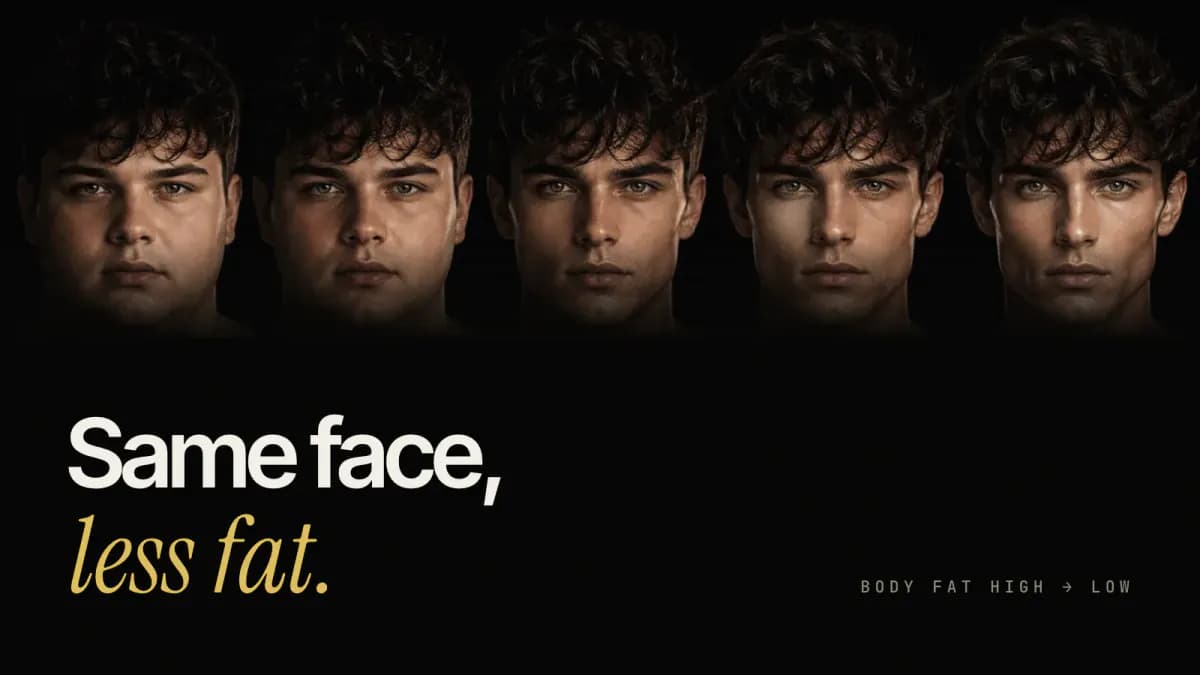
The other fear, that creatine gives you a puffy "creatine face," has even less behind it. Creatine does add some water weight, mostly early on and mostly inside muscle. No study has measured water in the face, and the puffiness people blame on creatine usually has more ordinary causes.
This guide covers both fears: where they came from, what the studies actually show, where the evidence runs out, and how to take creatine without looking bloated.
The short answer
Short answer: Creatine has not been shown to cause hair loss. One 2009 study found a rise in DHT (the hormone behind male-pattern baldness) during a high-dose loading phase, but it never measured hair, and a 2025 randomized trial found no change in DHT or any hair measure over 12 weeks. Creatine adds roughly 1 to 2 kg of water weight, mostly in muscle, and there's no evidence it specifically puffs up your face.
| Question | What the evidence says | How strong |
|---|---|---|
| Does creatine raise DHT? | One 2009 study says yes (during loading); a 2025 trial says no (at 5 g/day) | Weak and conflicting, both small |
| Does creatine cause hair loss? | The only trial measuring hair found no effect over 12 weeks | One small, short trial |
| Does creatine cause water retention? | Yes, modest, mostly early and mostly in muscle | Fairly consistent across studies |
| Does creatine make your face puffy? | No study has measured this | No direct research |
| Does creatine make you fat? | Weight gain is water and, with training, muscle | Fairly consistent |
Where the hair-loss fear came from (the 2009 rugby study)
In 2009, researchers in South Africa gave 20 college rugby players creatine in a crossover trial: a week of loading at 25 g/day, then two weeks at 5 g/day, compared against a glucose placebo. Testosterone didn't change, but DHT rose 56% after the loading week and stayed 40% above baseline after the maintenance phase. The DHT-to-testosterone ratio also went up.1
Why that matters: DHT is the androgen that shrinks genetically susceptible scalp follicles in male-pattern hair loss (the full mechanism is in the hair loss guide). So the internet made the leap: creatine raises DHT, DHT causes balding, so creatine causes balding.
The problems with that leap:
- The study never measured hair. No hair counts, no scalp photos, nothing. It measured blood hormones over three weeks.
- It was small and short. Twenty men, 21 days.
- It hasn't been replicated. A 2021 review of common creatine questions by sports nutrition researchers noted that this DHT finding has not been reproduced, and that the wider evidence doesn't show creatine raising testosterone.2
- Blood DHT is not the whole story. Male-pattern hair loss depends heavily on genetics, including variants in the androgen receptor gene that make follicles sensitive to DHT.3 A modest change in blood DHT doesn't automatically translate into faster hair loss.
None of this proves the 2009 result was wrong. It means one small hormone study was stretched into a claim about hair it never tested.
What the 2025 trial found, and its limits
In 2025, a team published the first randomized controlled trial built to answer the question directly.4 They split 45 resistance-trained men aged 18 to 40 into two groups: 5 g/day of creatine monohydrate or 5 g/day of a placebo, for 12 weeks. Thirty-eight finished.
They measured both sides of the argument:
- Hormones: total and free testosterone, DHT, and the DHT-to-testosterone ratio.
- Hair: hair density, follicular unit count, hair thickness and growth-phase measures, using trichograms and FotoFinder scalp imaging (the same kind of tools dermatologists use to track hair loss).
The result: no difference between creatine and placebo on any hormone or hair measure. DHT didn't rise and the hair numbers didn't change. The authors called it strong evidence against the claim that creatine contributes to hair loss.
That's a real step forward, but read it with its limits in mind:
- 12 weeks is short for hair. Hair grows in cycles that last years, and male-pattern loss plays out over years. A 12-week trial can catch a sudden effect, not a slow one.
- It's small. 38 completers is enough to catch a big effect, not a subtle one.
- No loading phase. The 2009 DHT spike showed up during 25 g/day loading. This trial used 5 g/day throughout, so it doesn't directly test the loading scenario.
- The men weren't selected for hair loss. It tells you about young, trained men in general, not specifically about men already losing hair.
- Industry ties. Several authors disclose links to supplement companies, including creatine donations. That doesn't make the result wrong, but it's worth knowing, and it's another reason to want independent replication.
Bottom line on the evidence: the one study that pointed to a problem measured the wrong thing, and the one study that measured the right thing found nothing. That's reassuring, not conclusive.
If you're genetically prone to hair loss
This is the group that actually worries, and the honest answer is that no trial has specifically tested creatine in men with active male-pattern hair loss. So here's how to think about it:
Your genes drive your hairline, not your supplements. Male-pattern hair loss tends to run in families and affects more than half of men over 50 to some degree.3 If you're on that path, you'll keep losing hair with or without creatine. The things that actually change the outcome are the proven treatments (minoxidil, finasteride and the others covered in the hair loss guide) and starting them early.
Don't blame creatine for loss you were going to have anyway. Lots of men start lifting and taking creatine in their late teens and twenties, which is exactly when genetic hair loss often starts to show. Starting creatine and noticing a thinner hairline around the same time is easy to misread as cause and effect.
If you want to be cautious anyway, that's a reasonable choice:
- Skip the loading phase. The only DHT rise ever reported happened during loading. A steady 3 to 5 g/day reaches the same muscle levels in about 3 to 4 weeks.25
- Take photos. Hairline and crown, same lighting, every few months. Trends beat guessing.
- Treat the actual cause. If you're losing hair, a dermatologist visit does more for your hairline than stopping creatine.
- Or just skip it. Creatine is useful for training, but it's not essential to looking good. If the worry costs you more than the benefit, leaving it out is fine.
If you notice sudden, heavy or patchy shedding, that doesn't fit the male pattern and has other possible causes (stress, illness, crash dieting, iron deficiency or thyroid problems). See a doctor rather than assuming it's the creatine.
Does creatine make your face puffy?
Here's what's actually known about creatine and water.
Creatine does add water. The International Society of Sports Nutrition's position stand says weight gain is the only side effect consistently reported in the research, and that loading causes short-term fluid retention of roughly 0.5 to 1 liter, in line with the weight people gain.5
Most of it seems to go into muscle, not under your skin. Creatine pulls water into muscle cells. In a 2003 trial, 32 trained men and women took creatine (a week of loading, then 5 g/day) for 28 days. They gained about 1.3 kg and about 2 liters of total body water compared with baseline, but the split between water inside and outside cells didn't change, and extracellular water (the kind involved in visible puffiness) didn't rise significantly.6 An 8-week trial in resistance-trained men found that water inside cells rose more with creatine than placebo, while water outside cells rose the same in both groups; the extra water tracked with extra muscle.7
No study has measured facial water. All the "creatine face" talk is anecdote. It's plausible that a few people notice a slightly fuller look during loading, but there's no research showing creatine specifically puffs up the face.
What usually explains a "creatine face" instead:
- Bulking. People often start creatine when they start eating more to build muscle. A calorie surplus adds fat, and some of it shows up in your face. That's your diet, not the powder. See body recomposition for how to build muscle without a big fat gain.
- More carbs and salt. Bigger meals mean more sodium and more stored carbohydrate, both of which hold water. The classic causes of a puffy face (salt, alcohol, short sleep) are covered in the debloating guide.
- Before-and-after photos. "Creatine face before and after" photos are rarely taken in the same lighting, angle, time of day or body-fat level. Morning versus evening alone can change how full a face looks.
Can creatine make your face fat? No. Creatine provides almost no calories, so it can't add body fat by itself. The weight it adds is water and, with training, muscle.
How to take creatine without the bloat
If you're using creatine to support your training (it pairs well with any of the workout splits on this site), these steps keep water gain and puffiness to a minimum:
- Skip loading. 3 to 5 g/day reaches full muscle saturation in about 3 to 4 weeks without the bigger, faster water spike of 20 to 25 g/day loading.25
- Use plain creatine monohydrate. It's the form with nearly all the research behind it. "Bloat-free" premium versions are marketing.
- Take it every day and don't cycle. Stopping and restarting means going through the early water gain again.
- Take it with a meal. Timing makes little difference, and with food it's easier to remember and easier on the stomach.
- Control the real puffiness drivers. Keep sodium reasonable, go easy on alcohol, and get enough sleep (see sleep and your appearance).
- Watch body fat, not the scale. Expect the scale to go up about 1 to 2 kg in the first month. That's water and glycogen in muscle, not fat. If your face is getting fuller over months, look at your calorie intake.
- Judge it at four weeks or later. Any early water shift settles as your muscle creatine stabilizes.
Frequently Asked Questions
Is creatine hair loss a myth? Mostly, yes. It grew out of one 2009 study that measured DHT but not hair. The only trial that measured hair found no effect over 12 weeks. It's not proven impossible, but there's no good evidence for it.
Is there a creatine hair loss study? Yes, one: a 2025 randomized controlled trial in 38 men who finished 12 weeks of 5 g/day or placebo. It found no differences in DHT, hair density, hair thickness or other hair measures.4 The 2009 rugby study is often called a hair loss study, but it only measured hormones.1
Does creatine make your face puffy or bloated? There's no direct evidence. Creatine adds water, mostly inside muscle, and the studies that split body water by compartment found little or no rise in the water outside cells.67 Puffiness while taking creatine usually comes from salt, alcohol, poor sleep or a calorie surplus.
What about creatine face before-and-after photos? Treat them with suspicion. Differences in lighting, angle, time of day and body fat explain far more than a supplement does. If you see a real change over months, it's almost always body fat.
Should I stop creatine if I'm losing hair? You can, and nothing bad will happen, but it probably won't save your hairline. Male-pattern hair loss is genetic and progressive. Getting a proper diagnosis and starting proven treatment early matters far more.
Does the creatine water weight go away? It stays as long as your muscles are saturated with creatine, but it mostly sits inside muscle and doesn't make you look softer. If you stop taking creatine, muscle creatine levels drift back down over several weeks and the extra water goes with them.
The bottom line
The hair-loss fear rests on a three-week hormone study that never looked at hair, and the one trial that did look at hair found nothing over 12 weeks. That trial is small and short, so the honest summary is "no good evidence of harm," not "proven safe." If you're genetically prone to hair loss, your genes and whether you treat early matter far more than creatine. Skipping the loading phase is a sensible, low-cost precaution.
The face-bloat fear has even less behind it. Creatine adds a little water, mostly in muscle, and no study has linked it to a puffy face. If your face looks fuller, check your diet, salt, alcohol and sleep before blaming the supplement.
References
Footnotes
-
van der Merwe J, Brooks NE, Myburgh KH. Three weeks of creatine monohydrate supplementation affects dihydrotestosterone to testosterone ratio in college-aged rugby players. Clinical Journal of Sport Medicine (2009);19(5):399-404. https://pubmed.ncbi.nlm.nih.gov/19741313/: In 20 rugby players, DHT rose 56% after a 25 g/day loading week and stayed 40% above baseline after maintenance; testosterone was unchanged; hair was not measured. ↩ ↩2
-
Antonio J, Candow DG, Forbes SC, Gualano B, Jagim AR, Kreider RB, et al. Common questions and misconceptions about creatine supplementation: what does the scientific evidence really show? Journal of the International Society of Sports Nutrition (2021);18(1):13. https://pmc.ncbi.nlm.nih.gov/articles/PMC7871530/: The 2009 DHT finding has not been replicated, the evidence doesn't show creatine raising testosterone, and loading is unnecessary because 3 to 5 g/day saturates muscle in about four weeks. ↩ ↩2 ↩3
-
MedlinePlus Genetics. Androgenetic alopecia. U.S. National Library of Medicine (2023). https://medlineplus.gov/genetics/condition/androgenetic-alopecia/: Male-pattern hair loss runs in families, involves androgen receptor (AR) gene variants and DHT, and affects more than half of men over 50. ↩ ↩2
-
Lak M, Forbes SC, Ashtary-Larky D, Dadkhahfar S, Robati RM, Nezakati F, et al. Does creatine cause hair loss? A 12-week randomized controlled trial. Journal of the International Society of Sports Nutrition (2025);22(sup1):2495229. https://pubmed.ncbi.nlm.nih.gov/40265319/: In resistance-trained men taking 5 g/day creatine or placebo for 12 weeks, there were no differences in testosterone, DHT, DHT-to-testosterone ratio, or any hair measure. ↩ ↩2
-
Kreider RB, Kalman DS, Antonio J, Ziegenfuss TN, Wildman R, Collins R, et al. International Society of Sports Nutrition position stand: safety and efficacy of creatine supplementation in exercise, sport, and medicine. Journal of the International Society of Sports Nutrition (2017);14:18. https://pmc.ncbi.nlm.nih.gov/articles/PMC5469049/: Weight gain is the only consistently reported side effect; loading causes short-term fluid retention of about 0.5 to 1 L; 3 to 5 g/day maintains stores. ↩ ↩2 ↩3
-
Powers ME, Arnold BL, Weltman AL, Perrin DH, Mistry D, Kahler DM, et al. Creatine supplementation increases total body water without altering fluid distribution. Journal of Athletic Training (2003);38(1):44-50. https://pmc.ncbi.nlm.nih.gov/articles/PMC155510/: Over 28 days creatine raised total body water by about 2 L and body mass by 1.3 kg, with no significant change in extracellular water or fluid distribution. ↩ ↩2
-
Ribeiro AS, Avelar A, Kassiano W, Nunes JP, Schoenfeld BJ, Aguiar AF, et al. Creatine supplementation does not influence the ratio between intracellular water and skeletal muscle mass in resistance-trained men. International Journal of Sport Nutrition and Exercise Metabolism (2020);30(6):405-411. https://pubmed.ncbi.nlm.nih.gov/32916658/: Over 8 weeks of training, intracellular water rose more with creatine, extracellular water rose equally in both groups, and the water gain tracked muscle gain. ↩ ↩2