Why Posture Matters for Looks
We rarely think that posture affects our face, but research shows it influences not only body balance but also jaw position, eye area projection, and even bone remodeling.
When posture is poor (slouching, forward head, “nerd neck”), the skull compensates by tilting. This misalignment can:
- Expose more of the orbital area, making eyes look droopier or more tired.
- Create a longer, more hollow eye appearance by shifting the frontal bone upwards.
- Affect mandibular (jaw) position, since resting occlusion depends on muscular balance influenced by head posture.
- Overwork neck and chewing muscles, contributing to TMJ tension, bruxism, or teeth grinding.
- Over time, change bone structure, since bone adapts to abnormal loads and stress.
In other words, bad posture doesn’t just hurt your back, it can directly influence your eye aesthetics, jawline sharpness, and overall facial harmony.
Eye Area & Cranial Base Alignment
The eyes are the focal point of the face. Studies in evolutionary psychology confirm that people unconsciously judge beauty, dominance, and intelligence through the eye area first.
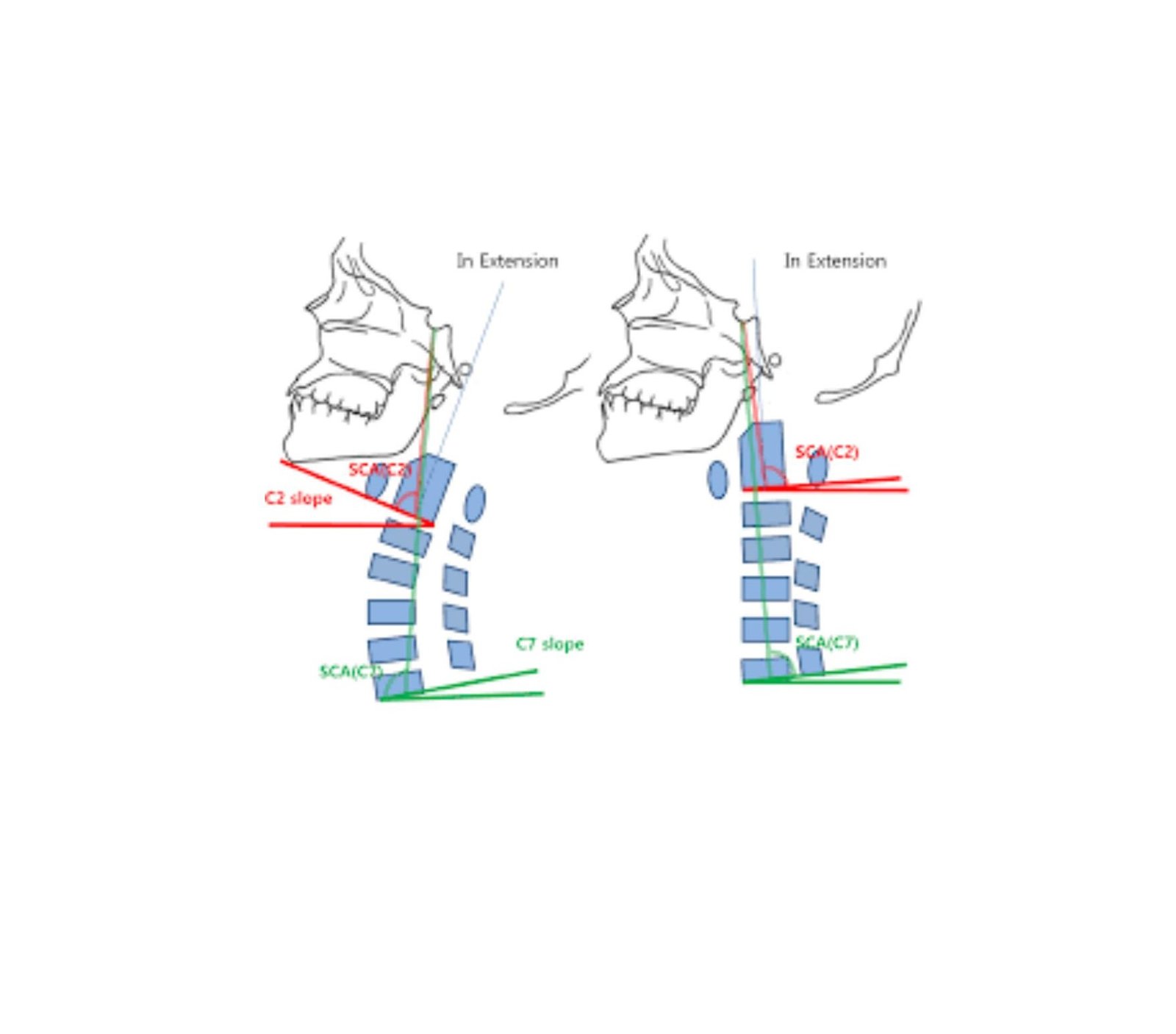
Poor cervical alignment (forward head posture) alters the cranial base and lifts the frontal bone. The result: less bone coverage of the eyes, more visible eyelid space, and orbitals that appear elongated. Correct posture helps “close” cranial base angles, supporting better orbital projection.
Diagram Example
"Analysis of sagittal alignment parameters following anterior cervical hybrid decompression and fusion of multilevel cervical Spondylotic myelopathy." Yuming Huang, 2019
TMJ, Jaw & Occlusion
When you slouch, the head tilts forward and down. To compensate, neck and back muscles overwork to hold the chin up. This constant strain affects the masticatory muscles and mandibular resting position.
Consequences:
- TMJ dysfunction (clicking, pain, limited movement).
- Tooth grinding due to muscle imbalance.
- Potential bone resorption or remodeling in extreme cases.
Good posture distributes body weight evenly and stabilizes the jaw naturally, preventing these long-term issues.
Breathing & Posture
Slouching compresses the ribcage and diaphragm, which reduces lung capacity. Poor breathing habits affect oxygenation, skin tone, and even the appearance of the under-eye area. Proper alignment allows full, efficient breathing, which supports both health and facial vitality.
Posture and Facial Aging
Chronic poor posture can accelerate visible signs of aging:
- Droopier eyelids and brows due to cranial shifts.
- Early formation of a double chin from soft tissue compression.
- Wrinkles and lines on the neck from constant forward tilt.
Maintaining upright posture helps preserve youthful facial proportions.
Tongue Position & Head Alignment
Head posture also influences tongue posture. A forward head makes it harder for the tongue to rest against the palate, reducing natural support for the maxilla and jawline. Correct alignment encourages proper tongue placement, which can stabilize dental arches and facial balance over time.
Everyday Habits That Harm Facial Posture
- Long hours looking down at a phone (text neck).
- Sleeping with overly high pillows that push the head forward.
- Sitting for hours in non-ergonomic positions.
Becoming aware of these daily triggers is the first step toward lasting change.
Corrective Strategies
1. Posture Exercises
- Chin Tucks: Stand tall, tuck your chin in as far as possible (yes, create double chins), and elongate the back of the head upward.
- 5–15 reps, several times per day.
- Restores proper cranial base alignment.
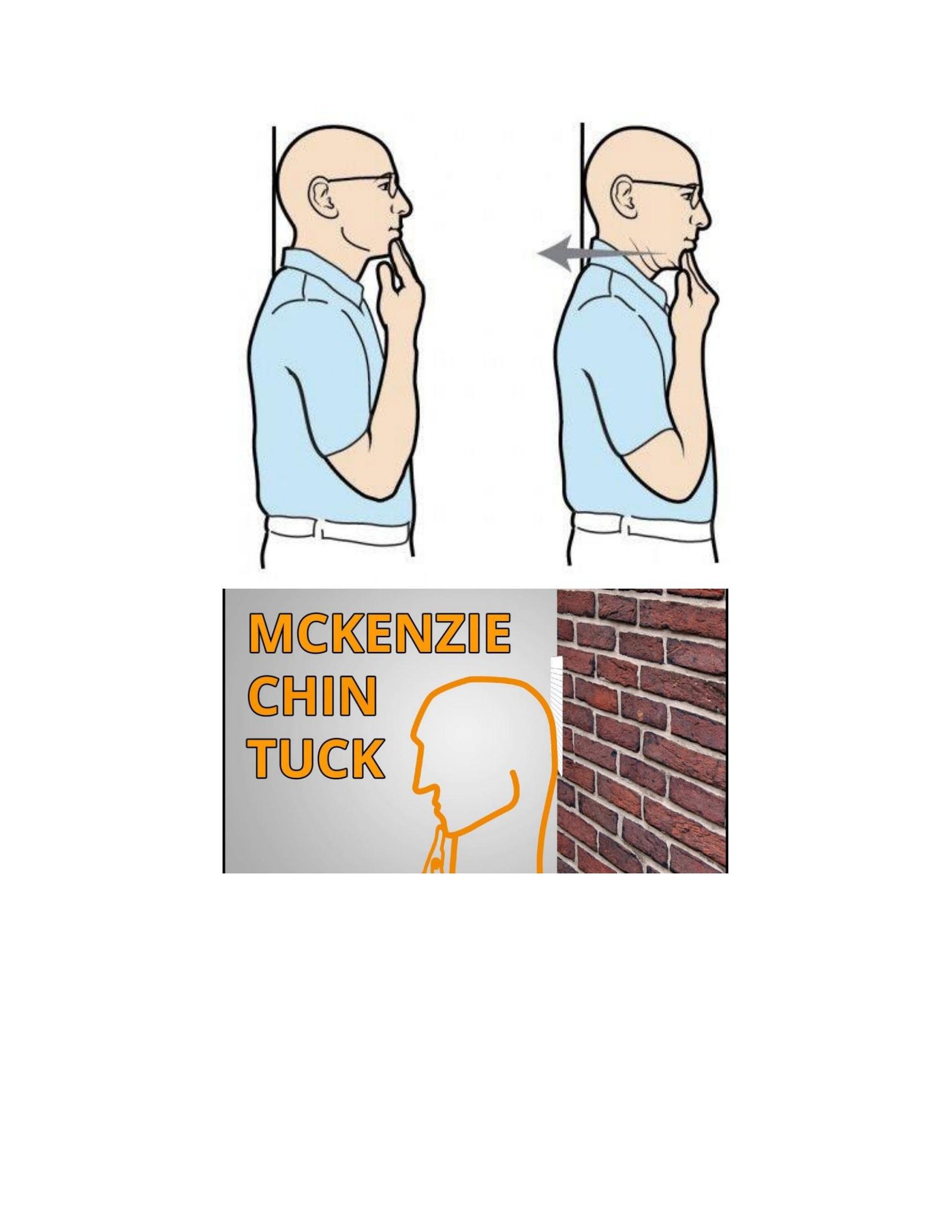
- Wall Alignment Drill: Stand against a wall with heels, glutes, upper back, and head touching. Hold for 1–2 minutes daily.
- Builds awareness of proper alignment.
2. Mobility & Strength Work
- Chest stretches to open tight pectorals.
- Scapular retraction drills (strengthening rhomboids and lower traps).
- Thoracic mobility exercises (foam roller extensions or floor mobility).
These reinforce correct alignment and make it easier to maintain long term.
Key Takeaways
- Poor posture affects not only the spine but also eye aesthetics, jawline definition, breathing, and even facial aging.
- Corrective exercises like chin tucks, wall drills, and strengthening routines can realign the cranial base and improve facial balance.
- Everyday habits like phone use and pillow choice play a huge role in posture.
- Long-term consistency matters: posture correction is gradual, but the benefits extend to health, appearance, and confidence.