Introduction and quick overview
Hollow cheeks and the ogee curve require a number of different factors coming into place to aesthetically compose your face - a lot of misconceptions are made. In this guide, I will cover and explain this topic in maximum detail. By the end, you will be able to pinpoint the exact key aspects leading to craniofacial harmony and forward growth, major roles that contribute to achieving the desired frontal and side profile, and how you can measure your own, all about cheekbone arching prominence setting and its ratios, the different aspects of the gonions and maxilla and the hyoid and palate corrections - alongside the ultimate plethora of methods to debloat your face quickly and longlasting. If you desire only to know how to debloat your face, scroll down to #10.
What is the ogee curve?
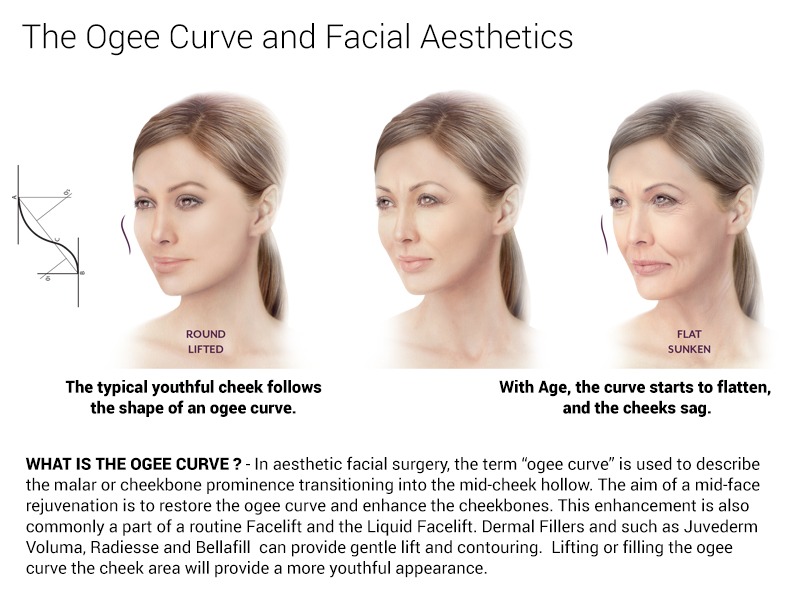
The ogee curve is a term used in facial aesthetics to describe a specific contour or shape of the face that is considered attractive and youthful. The term "ogee" originates from architecture, where it refers to a double curve or an S-shaped curve formed by the combination of a convex and a concave curve. In the context of facial aesthetics, the ogee curve represents the smooth, flowing line that starts at the forehead, continues along the prominent cheekbones, and curves down to the chin.
An ideal ogee curve is characterized by:
High, well-defined cheekbones (zygomatic bones) that create a convex curve in the upper part of the face. A gentle concave curve below the cheekbones, which can give the appearance of hollow cheeks. A smooth transition between the cheekbones and the jawline, resulting in a harmonious and balanced facial contour.
The ogee curve is often considered a desirable feature because it enhances facial depth and adds dimension, contributing to an overall attractive and youthful appearance. Factors such as facial bone structure, soft tissue distribution, and skin quality can influence its presence and prominence.
What are hollow cheeks?
Hollow cheeks refer to a facial aesthetic characterized by a sunken or concave appearance in the area between the cheekbones and the lower jaw. This feature creates a sculpted and more defined look, emphasizing the cheekbones and jawline.
The appearance of hollow cheeks is influenced by several factors, including:
Facial fat distribution: The amount and distribution of subcutaneous fat in the cheeks play a significant role in the appearance of hollow cheeks.
Muscle tone: The tone and size of the buccinator muscle can affect the appearance of hollow cheeks.
Facial bone structure: The prominence and shape of the cheekbones and the position of the maxilla influence the appearance of hollow cheeks.
Skin quality: The elasticity and firmness of the skin impact the appearance of hollow cheeks.
Malar and palate prominence
Malar prominence refers to the projection or fullness of the cheekbones. The malar area consists of the zygomatic bones, which form the structure of the cheekbones. High or well-defined malar prominence creates a youthful appearance and contributes to the ogee curve.

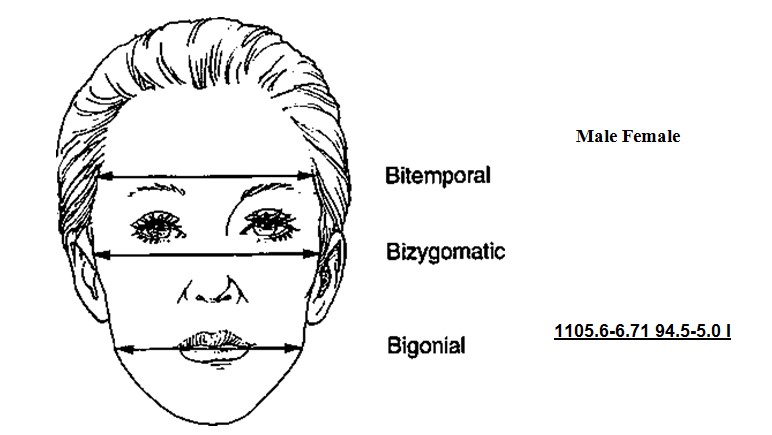
To measure your malar prominence, divide your bigonial width by your zygomatic width. A lower ratio indicates more dimorphism.


Palate expansion can influence cheekbone appearance by affecting the maxilla. Methods include:
- Rapid Palatal Expander (RPE)
- Slow Palatal Expander
- SARPE (Surgically-assisted Rapid Palatal Expansion)
- Facemask / Reverse-Pull Headgear
- MARPE (Miniscrew-Assisted Rapid Palatal Expansion)
Example of increased lateral prominence:

Gonion traits
Gonion eversion and inversion refer to the outward and inward curvature of the mandibular angle.
Inverted Gonion: more inward angle, resulting in a tapered, V-shaped jawline.
Everted Gonion: more outward angle, resulting in a broader, square jawline.
Gonion eversion can be influenced by genetics, age, and ethnicity.


To create an illusion of everted gonions, possible options include:
- BSSO (Bilateral Sagittal Split Osteotomy)
- Inverted L Osteotomy
- Mandibular Angle Ostectomy
- Custom jaw implants
- Injectable fillers
- Fat grafting
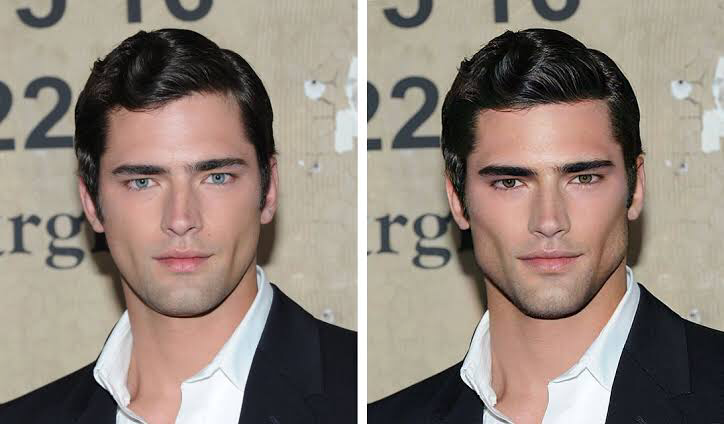
Example of inverted × everted gonion:
Maxillary triangle
Identify the three points of the triangle: the tip of the nose, the center of the upper lip, and the mid-point of the upper edge of the chin.
Measure the length of the vertical line connecting the center of the upper lip to the mid-point of the upper edge of the chin.
Measure the length of the horizontal line connecting the tip of the nose to the mid-point of the upper edge of the chin.
Calculate the ratio between the vertical and horizontal lines. A ratio of 0.8 is considered ideal for both males and females.
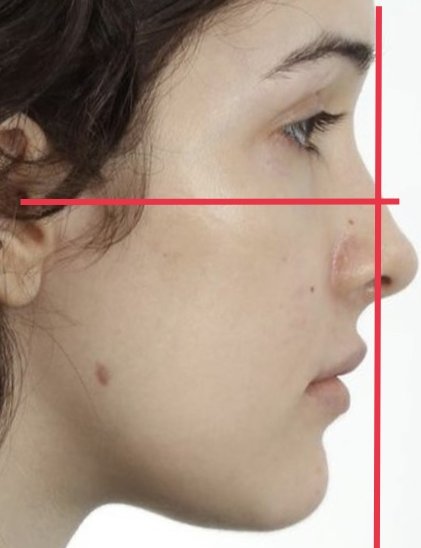
Frankfurt plane
Position the individual: They should be seated with their head in a natural position, looking straight ahead.
Place the head in the cephalostat so the Frankfurt plane is parallel to the floor.
Take a cephalometric X-ray: A lateral X-ray of the head is taken, and the maxilla and other facial structures are evaluated using specialized software.
Measure specific angles and distances based on the Frankfurt plane.
9 Conclusion
Achieving hollow cheeks and the ogee curve requires a multifaceted approach involving the facial structure.
The palate influences facial shape and forward growth.
Malar and bigonial width create the ogee curve by shaping the cheekbones and jawline.
Outward-set gonions sharpen the lower third.
The gonial angle impacts jaw definition.
The canine fossa affects cheekbone prominence.
Maxillary projection shapes the midface and prevents flattening.
Hyoid bone position influences neck posture and lower-face harmony.
After addressing craniofacial factors, debloating plays a major role in maximizing facial definition.
10 The ULTIMATE Debloating Guide
41 methods for leaning out your face
NOTE: Difficulty increases as the list progresses; riskier and harder methods appear further down.
1) Leanmaxxing
If you're not below ~15% body fat, you're not trying. Lose fat for hollow cheeks.
2) Drinking copious amounts of water
Drink large but safe quantities of water daily.
Galpin Equation:
Bodyweight (lbs) ÷ 30 = ounces of water per 15 minutes of intense activity.
Drink throughout the day instead of all at once.
3) Check yourself for hypothyroidism
Hypothyroidism can cause:
- Weight gain
- Fluid retention (puffiness)
- Skin changes
- Muscle weakness
These can worsen or mask hollow cheeks.
4) Avoiding alcohol
Alcohol causes bloating by:
- Dehydration
- Vasodilation
- Inflammation
- Salt/water retention
- Sensitivity to ingredients like sulfites or histamine
5) Reducing salt intake
Salt → water retention → facial bloating.
Aim for ~500mg sodium per day or even lower for rapid debloating.
6) Potassium:sodium ratio
Increase potassium to push out sodium.
Aim for at least 4:1 potassium to sodium.
7) Fasting
Fasting reduces bloating by:
- Reducing GI volume
- Resting the gut
- Reducing fermentation and gas
- Improving gut bacteria
- Increasing water elimination
8) Less carb consumption
Carbs can cause:
- Glucose spikes
- Gas production
- Stomach distention
- Fermentation of high-GI foods
9) Cardio
Benefits:
- Improved digestion
- Gas release
- Better circulation
- Less stress
- Reduced water retention
- Hormonal regulation
Do 30–45 minutes daily for debloating.
10) Eating smaller, more frequent meals
Helps by:
- Reducing stomach volume
- Improving digestion
- Stabilizing blood sugar
- Preventing overeating
Ideal: 4–7 meals per day.
11) Avoid foods that cause bloating
Foods that commonly cause gas:
- Beans
- Cabbage and cruciferous vegetables
- Onions (fructans)
- Dairy (lactose)
- Artificial sweeteners
- Fried/fatty foods
- Garlic
- Wheat/grains
- Chewing gum
- Apples, pears, peaches, plums
12) Avoid carbonated beverages
Carbonation = swallowed air + CO₂ gas release → bloating.
13) Fix irritable bowel syndrome (IBS)
IBS causes bloating due to:
- Altered gut motility
- Gas sensitivity
- FODMAP intolerance
- Visceral hypersensitivity
14) Consume probiotics
Probiotics help by:
- Improving digestion
- Balancing gut bacteria
- Reducing inflammation
- Improving gut motility
- Strengthening gut barrier
15) Elimination diet
Removes triggers (lactose, gluten, FODMAPs).
Helps identify sensitivities, reduce inflammation, and support gut balance.
16) Aldosterone regulation
High aldosterone → sodium/water retention → bloating.
Caused by dehydration, high salt intake, hormonal disorders, medications.
17) Lowering cortisol levels
High cortisol → water retention, impaired digestion, increased hunger, insulin resistance → bloating.
18) Lowering estradiol levels
Elevated estradiol in men → water retention, slowed gut motility, prostaglandin changes, impaired liver function, and obesity-related bloating.
19) Checking C-Reactive Protein levels
High CRP = inflammation → leaky gut, microbiome imbalance, reduced digestion, and fluid retention.
20) Rosacea and acne
Inflammation, medications, stress, poor sleep, and systemic inflammatory responses can worsen bloating.
21) Reducing estrogen
Lowering estrogen in men can reduce fluid retention and bloating.
22) Elevate your head while sleeping
Helps lymphatic drainage, reduces puffiness, reduces reflux.
23) Lymphatic draining
Manual Lymphatic Drainage stimulates lymph flow, reduces fluid buildup, improves immunity, and decreases inflammation.
24) Gua Sha
Benefits:
- Lymphatic drainage
- Improved gut motility
- Muscle tension release
How to use:
- Apply oil
- 45-degree angle
- Upward/outward strokes
- Work neck → face
- Use light pressure under eyes
Daily for best results.
25) Fixing sleep apnea
Sleep apnea → stress, poor sleep, medications, obesity, GERD — all contributing to bloating.
26) Fixing TMJ
TMJ issues → muscle tension, stress, medication effects, poor chewing, swallowing air → bloating.
27) Firmer skin
Firmer skin supports cheek structure and may reduce hollowing appearance.
28) Buccinator atrophy
Buccinator hypertrophy makes cheeks look bloated.
To atrophy:
- swallow with tongue only
- chew with teeth aligned (no side-to-side chewing)
29) Correcting kyphosis and bad posture
Good posture reduces stress on facial muscles/bones and may improve airway/breathing, aiding facial structure.
30) Liver cleansing
Cholestasis → impaired bile flow → bloating.
Treatment includes ursodeoxycholic acid.
Requires medical diagnosis.
31) Facial exercises
- Cheek lifts
- Smile lifts
- Jawline pulls
- Tongue-to-palate
- Ogee curve exercise
32) Smoking to accelerate aging (satirical)
Smoking accelerates aging, reduces fat pads, deteriorates skin.
Not recommended, harmful.
33) Using accutane to reduce skin thickness
Accutane reduces keratinocyte activity and collagen → thinner epidermis/dermis.
34) Fillers
Hyaluronic acid fillers restore cheek volume; last 6–24 months.
35) Aqualyx
Injectable that dissolves fat cells; body metabolizes the released fat.
36) Fat grafting
Fat harvested → processed → injected into cheeks for volume or contour changes.
37) Implants
Cheek implants push skin/soft tissue outward, sometimes creating a hollower area beneath.
38) Bone smashing
"Bone smashing" attempts to reshape bones via repeated trauma (risky, controversial, not recommended).
40) Bichectomy
Bichectomy, also known as buccal fat removal, is a cosmetic procedure that involves removing fat pads from the cheeks to create a more defined and contoured facial appearance.
During the procedure, the surgeon makes a small incision inside the mouth and removes a portion of the buccal fat pad, which is located deep in the cheek. The surgery typically takes about one hour and may be performed under local or general anesthesia.
Bichectomy is considered a safe and effective procedure with minimal downtime. Most people can return to work and normal activities within a few days.
41) Lateral osteotomy
Lateral osteotomy is a surgical procedure used to reshape and reposition the nasal bones, usually as part of a rhinoplasty.
During the procedure, the surgeon makes incisions around the nose and uses specialized tools to cut and reposition the bones in the nasal sidewalls. This can involve controlled bone fractures to create a more refined shape.
Lateral osteotomy can indirectly influence midface appearance by altering the shape and position of the nasal bones. Depending on the extent of the changes, it may contribute to:
- a more defined nasal contour
- improved facial balance
- a more prominent ogee curve
- a subtly more defined cheekbone area
These changes can sometimes create the appearance of slightly less hollow cheeks due to improved facial proportions.